



Most people don’t set out to create a “life’s work”; they set out to make a living, get through the next month, and navigate the opportunities that appear while surviving the ones that disappear. Careers are assembled from timing, pressure, luck, competence, and the ability to adapt when the ground shifts under your feet – the same forces that shape A Life’s Journey.
Work shapes more than income. It dictates where we live, how we spend our days, who we meet and what we can afford to ignore. It determines whether we have the freedom to say no, or whether we’re negotiating with reality. Even when work isn’t inspiring, it becomes the structure around which everything else has to fit. It’s the quiet architecture of daily life.
The world doesn’t make this easy. Industries rise and collapse. Skills that once mattered become irrelevant. Companies reorganize, merge, downsize, or vanish. Borders open and close. Entire fields transform faster than people can retrain. Most of the time, adaptation isn’t a choice – it’s the only option. A life’s work is built inside these shifting conditions, not outside them, and shaped by the trade‑offs people learn they can no longer make. Along the way, people collect more than job titles; they gather the scars, habits, and clarity that come from refusing to go backwards. They carry the quiet record of everything they’ve had to endure, negotiate, and build in a world that never matched the one they were promised.
The Past
In the past, a life’s work was shaped less by choice and more by inheritance. People stepped into the roles their families, villages, or trades handed them, often before they understood what the work demanded. Skills were passed down through repetition, not instruction, and mastery came from years of doing the same tasks until they became instinct. Stability wasn’t guaranteed, but continuity was expected: the farm stayed in the family, the craft stayed in the workshop, the trade stayed in the guild. A life’s work grew slowly, built through seasons, apprenticeships, and obligations that left little room for reinvention. And in that slow accumulation, people gathered more than expertise; they gathered identity, reputation, and a sense of belonging tied directly to what they did.
They learned what endurance required, what tradition imposed, and what sacrifices were simply assumed rather than negotiated. Progress wasn’t measured in promotions or pivots but in surviving hard years, raising competent successors, and maintaining standards that honored those who came before. A life’s work wasn’t a personal brand or a curated narrative; it was the visible record of labor performed consistently over decades. It reflected the world someone was born into, not the one they imagined. And in the end, its meaning came not from ambition but from continuity – from the quiet certainty that the work they carried forward had been carried by others long before them.
The Present
Here is a short but very inspiring speech about (professional) life by Coca Cola’s former CEO Bryan Dyson delivered at the 172nd commencement of Georgia Tech on September 6, 1996.
This speech is commonly called the “30-second speech”. In reality, the speech lasts longer but the part that was isolated is the one that’s largely passed around. His insight is as valuable today!

“Imagine life as a game in which you are juggling some five balls in the air. You name them ‘work’, ‘family’, ‘health’, ‘friends’ and ‘spirit’ and you’re keeping all of these in the air. You will soon understand that ‘work’ is a rubber ball. If you drop it, it will bounce back. But the other four balls – ‘family’, ‘health’, ‘friends’ and ‘spirit’ – are made of glass. If you drop one of these, they will be irrevocably scuffed, marked, nicked, damaged or even shattered. They will never be the same.
You must understand that and strive for balance in your life.
How?
- Don’t undermine your worth by comparing yourself with others. It is because we are different that each of us is special.
- Don’t set your goals by what other people deem important. Only you know what is best for you.
- Don’t take for granted the things closest to your heart. Cling to them as you would your life, for without them, life is meaningless.
- Don’t let your life slip through your fingers by living in the past or for the future. By living your life one day at a time, you live ALL the days of your life.
- Don’t give up when you still have something to give. Nothing is really over until the moment you stop trying.
- Don’t be afraid to admit that you are less than perfect. It is this fragile thread that binds us to each other.
- Don’t be afraid to encounter risks. It is by taking chances that we learn how to be brave.
- Don’t shut love out of your life by saying it’s impossible to find. The quickest way to receive love is to give it; the fastest way to lose love is to hold it too tightly: and the best way to keep love is to give it wings.
- Don’t run through life so fast that you forget not only where you’ve been, but also where you are going.
- Don’t forget, a person’s greatest emotional need is to feel appreciated.
- Don’t be afraid to learn. Knowledge is weightless, a treasure you can always carry easily.
- Don’t use time or words carelessly. Neither can be retrieved.
Life is not a race, but a journey to be savored each step of the way. Yesterday is History. Tomorrow is a Mystery and Today is a Gift: That’s why we call it The Present“
“Value has a value only if its value is valued.”
– Brian Dyson
The Future
The global economy is rapidly transforming, making adaptability essential for career success and informed investments. At the same time, inflation, trade uncertainty, climate risks, high sovereign debt, and shifting monetary policies complicate stability, creating conditions where traditional assumptions no longer hold.
These combined pressures demand forward‑thinking strategies that enable individuals and organizations to stay agile, anticipate emerging risks, and position themselves to capture new opportunities as they arise.
In this evolving landscape, Economic Stability is no longer a given – it must be actively cultivated through resilient systems and strategic foresight.
All this contributes to an unpredictable landscape that demands strategic resilience. Even small disruptions ripple across markets, highlighting the need for proactive management and global cooperation to sustain stability. As economies evolve, those who can anticipate these shifts and implement adaptive strategies will be better positioned to mitigate risks, seize emerging opportunities and ensure long-term growth.
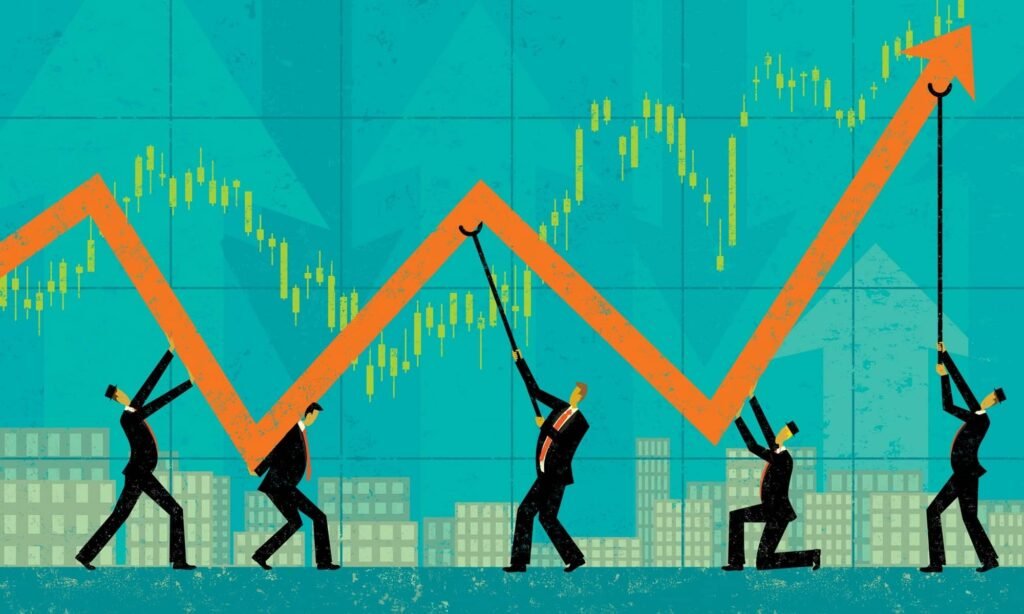
In today’s interconnected environment, opportunities arise not only from navigating uncertainty but also from actively shaping the future through collaboration and mobility. Companies are increasingly called upon to contribute their expertise to ambitious projects, while individuals are challenged to position their qualifications and careers on an international stage. By engaging with targeted Business Requests and ensuring global recognition of Swiss credentials to boost Careers Abroad, both organizations and professionals can expand their reach, strengthen their impact, and open doors to sustainable growth across borders.
Business Requests

As part of specific tenders and targeted requests for proposals, potential partner companies are invited to contribute their solutions and expertise. Whether through pioneering sustainability initiatives, the promotion of innovation, or the development of tailored approaches – each submission represents an opportunity to participate in impactful projects.
From innovative ventures such as supporting a start-up in Switzerland, to carbon offsetting in retail within a growing B2C market for emission certificates, through to collaboration on groundbreaking (E-)Motion Elements projects like “Wheelchairs 2.0” for enhanced mobility – reliable and professional partners from diverse fields are sought.
Career Abroad

Planning to apply to an international company or take your career abroad? Your Swiss degree title is valuable – but will employers abroad understand it? Ever wondered how your non-academic, yet hard-earned Swiss title translates into English?
To support recognition, the SERI (State Secretariat for Education, Research and Innovation) has published a Reference Paper on this issue. It offers recommended English translations for Swiss degree titles, especially from professional education and training.
These translations reflect the level and nature of the qualification without overstating its equivalence to academic degrees. Though not legally binding, they provide a consistent framework to help employers, institutions, and graduates communicate credentials across borders.
The Future of Work

Advances in automation and artificial intelligence are rapidly reshaping The Future of Work, shifting value creation away from predictable tasks and toward capabilities rooted in creativity, judgment and human connection. These shifts are accelerating across industries, influencing everything from organizational design to individual career trajectories. As technology takes over routine activities, human strengths become the primary differentiators in competitive environments. This evolution underscores why continuous learning, adaptability and technological fluency are no longer optional but essential foundations for long‑term professional resilience.
At the same time, the rise of remote work, global connectivity, and the expanding gig economy is redefining how individuals structure their careers. Flexibility and autonomy are increasing, but so is the responsibility placed on workers to manage their own development, stability, and boundaries. As digital tools blur the line between personal and professional life, both individuals and organizations must cultivate practices that protect well‑being while enabling high performance.
Looking ahead, the future of employment will be shaped not only by incremental advances in automation but also by the possibility of transformative leaps such as the technological singularity. These shifts raise fundamental questions about the role of human labor, the ethics of AI‑driven decision‑making, and the economic models needed to ensure broad societal benefit. Navigating this landscape will require adaptability, ethical governance, and a commitment to building systems where human capability and technological innovation reinforce one another.
What’s More



The posts in My Blog feature reflective, story-driven pieces rooted in personal and societal insights. The topics in My Interests explore abstract, philosophical ideas and their cultural and social impact. The lines in My Quotes share brief reflections that highlight clear insights shaped by lived experience. Subscribe to get Site Updates and be notified whenever new content is published.
👁️ 8,133 Views