

Some changes don’t happen gradually. Below a certain speed you fall back; above it you’re free. What that means and why it matters.

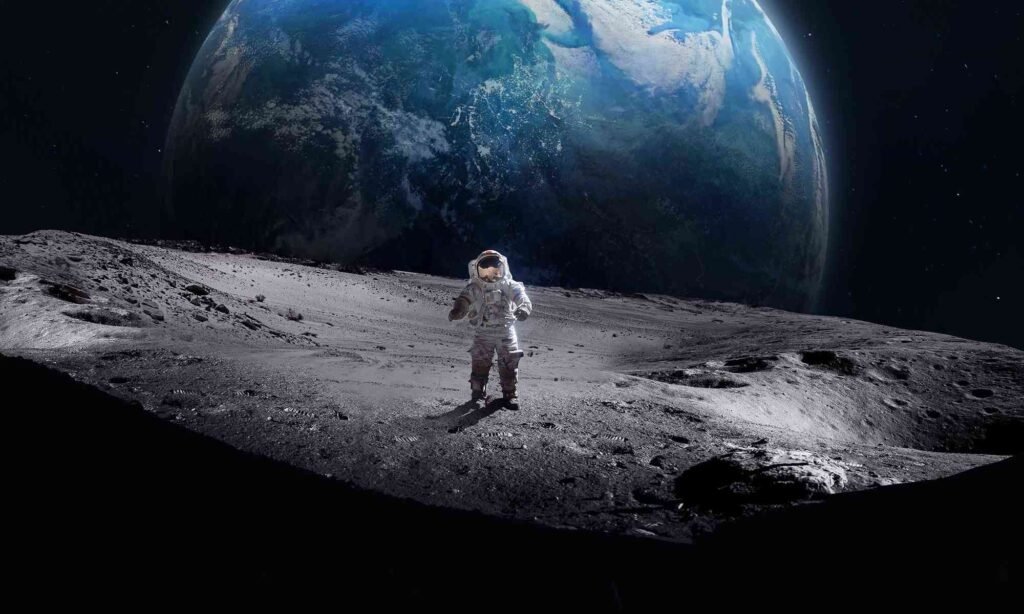
Every rocket that leaves Earth faces the same problem: The planet pulls it back. Push a little, and it rises and falls. Push harder, and it circles the planet forever. Only past one specific speed does it break away for good. Physicists call that speed escape velocity. It also happens to describe one of the most frustrating and most liberating patterns in human life: Why some fresh starts stick, and why so many others quietly fall back to where they began.
In short: Gravity is the pull (of a planet, or just as much of our habits, comfort and past), orbit is the loop and escape velocity is the line between going around in circles and actually leaving.
What Escape Velocity Means
Escape velocity is the minimum speed an object needs to break free of a body’s gravity without any further push. Below it, gravity wins sooner or later. Above it, the object keeps moving away, and the pull gets weaker the farther it goes.
- It depends on the body, not the traveler. A pebble and a spacecraft need the same speed to escape Earth: about 11.2 km per second, or roughly 40,000 km/h. The Moon asks for only 2.4 km/s, Jupiter for about 60 km/s.
- Falling short doesn’t mean halfway. Reach half the escape velocity and you don’t get halfway to space. You come back down. Reach a bit less than the full speed and you end up in orbit, circling endlessly but never leaving.
- It’s about speed at one moment, not effort over time. In theory, one big enough push at the start is all it takes. In practice, rockets burn for minutes and shed weight as they climb, because carrying everything all the way up is too heavy.
- The extreme case is a black hole. There, escape velocity exceeds the speed of light, so nothing gets out, not even light itself.
The Gravity Wells We Live In
People live inside gravity wells too. They’re made of habits, routines, comfort zones, expectations, sunk costs and the quiet voice that says “maybe next year.” None of them are bad in themselves. Gravity is also what keeps us grounded. But when it’s time to leave, they pull just as hard.
- Habits are the strongest pull. They run on autopilot and cost no energy, so every new behavior has to compete with an old one that’s already in motion.
- Comfort zones feel safe because they’re known. Leaving means trading certainty for possibility, and the mind tends to overrate the first.
- Environments hold us in place: the same people, places and roles keep reinforcing the same version of ourselves.
- Organizations have their own gravity. Processes, politics and “we’ve always done it this way” can pull every change initiative back into the old shape.
The sneaky one is orbit. Orbit feels like progress, because something is moving. The New Year’s resolution that lasts until February. The reorganization that changes the chart but not the culture. The career change that’s been “in planning” for five years. Energy goes in, but the path keeps bending back.
And not everyone starts in the same well. Just as a bigger planet demands more speed to escape, some people begin much deeper down: born into poverty, shut out of good education, held back by discrimination or simply by where they happen to live.
This is what Inequities are: Barriers that keep people from reaching their full potential, based on factors beyond their control. They aren’t about willpower; they raise the escape velocity before the journey begins. Breaking free from a deep well is a bigger achievement than it looks, and failing to is rarely for lack of trying.

Physics vs Life
The parallels are closer than they first seem. The table sums up how each piece of the physics shows up in everyday change.
| Criteria | Physics | Life |
|---|---|---|
| The pull | Gravity of a planet or star | Habits, comfort, expectations, systems |
| Falling back | Speed too low, object returns | Old behavior returns after a short burst |
| Orbit | Moving fast, but circling | Busy, but stuck in the same loop |
| Escape velocity | Minimum speed to break free | Minimum commitment for change to stick |
| Size of the body | Bigger body, stronger pull | Deeper roots, harder to leave |
| Staging | Dropping empty fuel tanks | Letting go of what no longer serves |
| Gravity assist | Using a planet’s pull to gain speed | Using people, timing or momentum |
| Distance | Pull weakens with distance | Old patterns fade the longer you stay away |
In short, change rarely fails for lack of effort. It fails because the effort stays just below the threshold where it would carry itself.
The Fear Before Liftoff

If change fails just below the threshold, the obvious question is why we hold back that last bit of speed. Most of the time, the answer is Trepidation: The nervous fear of what may happen once we let go. It’s rarely loud panic, more often quieter forms of it: anxiety about what could go wrong, dread of losing what we know, the vertigo of facing a future with no familiar ground beneath it. Even FOMO, the fear of missing out, plays its part, keeping us busy chasing everything nearby instead of committing to one direction. And sometimes it’s simply the fear of trying and failing, which can feel worse than never trying at all.
Fear is gravity’s most convincing voice. It doesn’t say “stay forever.” It says “not yet.” And “not yet,” repeated often enough, is exactly how orbit becomes a way of life. Recognizing that trepidation isn’t a stop sign, just part of the pull, is often what makes the difference between another lap and a real departure.
What It Takes to Break Free
Rocket engineers have spent decades solving the escape problem. Their answers translate surprisingly well:
- Commit fully at launch. A rocket doesn’t leave at half throttle. The first phase of any change needs more energy than seems reasonable, because that’s when the pull is strongest.
- Shed weight as you climb. Rockets drop empty stages so they don’t haul dead mass into space. Old obligations, outdated goals and draining relationships work the same way.
- Pick the launch window. Space missions wait for the moment when planets line up and the trip costs the least. Some moments in life (a move, an ending, a new role) make change easier than others.
- Use a slingshot. Voyager reached the outer planets by borrowing speed from Jupiter and Saturn. Mentors, communities and the right partners can lend momentum you couldn’t generate alone.
- Keep going past the point of return. Gravity weakens with distance, but only for those who keep moving. The early stretch is the hardest, and it gets easier the farther you get from where you started.
Escape velocity isn’t about trying harder forever. It’s about pushing hard enough, once, to stop being pulled back.
Conclusion
Escape velocity is a reminder that change has a Threshold. Below it, every effort eventually falls back or turns into orbit: busy, familiar and going nowhere. Above it, the change starts to carry itself, and the old pull fades with every step away. Gravity isn’t the enemy. It’s what holds us together.
But when it’s time to take off, the question isn’t whether we’re moving. It’s whether we’re moving fast enough to leave. So pick your launch window, drop what weighs you down, and push just a little harder than feels comfortable, because that last bit of speed is the difference between circling and leaving.
What’s More



The posts in My Blog feature reflective, story-driven pieces rooted in personal and societal insights. The topics in My Interests explore abstract, philosophical ideas and their cultural and social impact. The lines in My Quotes share brief reflections that highlight clear insights shaped by lived experience. Subscribe to get Site Updates and be notified whenever new content is published.
 Views7,235totalThanks for reading

 Personal
 Professional