


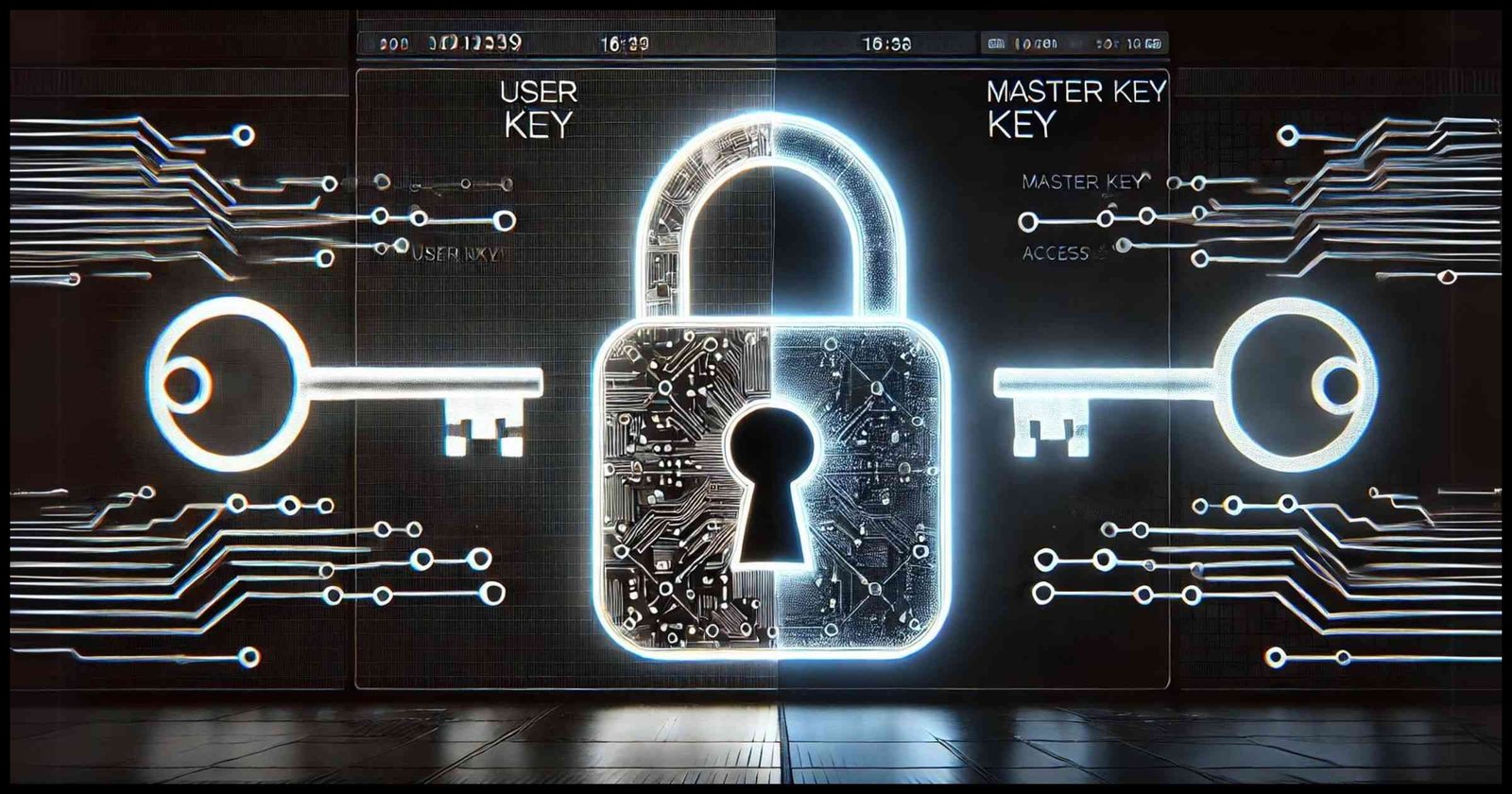
Progress has never belonged to those who wait their turn. Every system – digital, corporate, social, or psychological – presents a front door to manage the many and a back door for those who understand how structures actually work. The back door is not a trick but a worldview: The discipline of refusing to let official pathways define what is possible. It is the study of gaps, edge cases, blind spots, and unguarded channels – the places where real leverage hides.
The Architecture of the Bottleneck
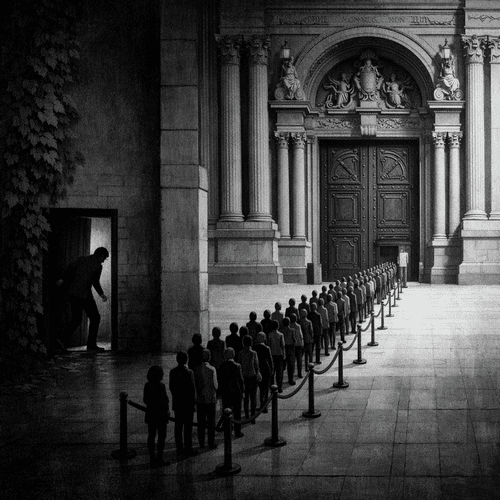
The front door is for the masses; the back door is for those who design the bypass. Whether it’s code slipping past a firewall, a pivot outmanoeuvring a rival, or a connection that skips the lobby, the aim is the same: Reaching the goal without formal permission. It is the operating system of people who refuse to let structure dictate trajectory.
We’re conditioned to respect the “front door,” the symbol of sanctioned entry. It’s where rules sit, guards watch, and lines form. In careers it’s the job portal; in society, the legal system; in tech, the polished interface – a moral façade engineered as a bottleneck. The ritual of waiting is framed as virtue, even when it serves only the system.
But the front door is intentionally a bottleneck. It is designed to slow you down and ensure you fit the pre‑existing mould of the system. For the masses, the lobby is a place of waiting. For the strategist, the lobby is a decoy. While the crowd is busy showing IDs and filling out forms, the real players are seeking the “back door” – the silent, unofficial entry point that leads directly to the seat of power. It is the path chosen by those who refuse to let visibility determine their velocity, moving where the system cannot track, predict, or contain them.
The Digital Ghost: Sovereignty through the Logic Gap
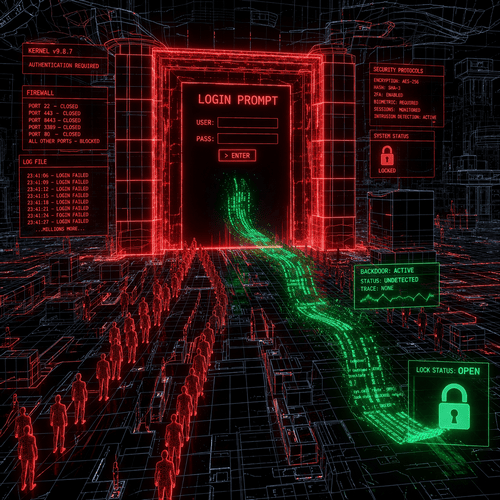
The “back door” in computing is often framed with fear, but remove the moral panic and it becomes a lesson in logical sovereignty. The login prompt is simply a socially enforced ritual wrapped in code, assuming you will identify yourself and wait for permission. The strategist sees that the straight path is rarely the one presented.
A digital architect knows a system is only as strong as its weakest edge case. Embedding a hidden pathway isn’t “breaking in” but demonstrating a deeper command of the system’s logic – the digital ghost who moves without a trace. In an age ruled by algorithms, the one who knows the hidden commands doesn’t need a key; they redefine the lock.
This sovereignty comes from intimacy with the machine. While ordinary users interact with the software’s surface, the architect works with its nervous system. Every “No Entry” is just a line of code that can be rerouted. Maintaining hidden access ensures they are never locked out of their own creations, turning digital barriers into suggestions for the uninitiated. It is the quiet advantage of someone who understands that true control lies not in the interface, but in the invisible architecture beneath it.
The Strategic Pivot: The Power of the Blind Side
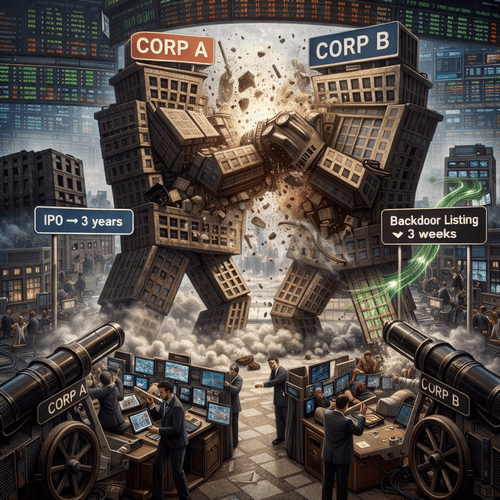
The most decisive move in global business is the one made in an opponent’s blind spot. The front‑door approach is a head‑on collision where resources decide the winner; the back‑door approach redirects energy instead of contesting it. It replaces force with angle.
A back‑door listing embodies this logic. While traditional firms burn time and capital navigating IPO bureaucracy, the strategist merges into a dormant public shell and steps directly onto the exchange. Strategy is the art of finding where the walls aren’t – the gap between what rivals expect and what they actually defend. Efficiency becomes rebellion.
Beyond finance, this shift moves from push to flow. When a market leader fortifies its product, it blinds itself to the side entrance opened by a faster competitor. The back‑door strategist doesn’t storm the fortress; they build a better city next door while the incumbent polishes cannons. It is the triumph of the unseen over the obvious, where speed and angle beat mass and momentum. It is the reminder that advantage belongs to those who move where the dominant player isn’t even looking.
The Social Short-Circuit: Subverting the Meritocracy Myth
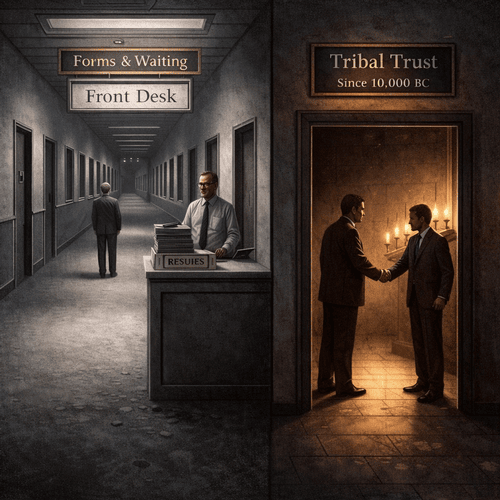
The myth of the linear path tells us to hand over resumes at the front desk and wait, but the social back door shows that trust outranks forms. The lobby filters people out; relationships carry you over it. The real meritocracy is built on access, not paperwork.
This isn’t nepotism but social engineering as a deliberate craft. Human systems run on relationships, not portals. A five‑minute exchange with a decision‑maker outweighs a thousand cold emails because a trusted intermediary validates your value and moves you past the bureaucracy of first impressions.
This shortcut taps into the pre‑bureaucratic layer of human nature. People trust familiar faces over credentials, no matter how polished the documents. Walking through the social back door isn’t skipping the line – it’s recognizing that the line is an artificial structure for those who haven’t yet learned to build the bridge. It is the quiet leverage of someone who understands that access is earned through resonance, not procedure.
The Psychological Bypass: The Heart’s Rear Entrance
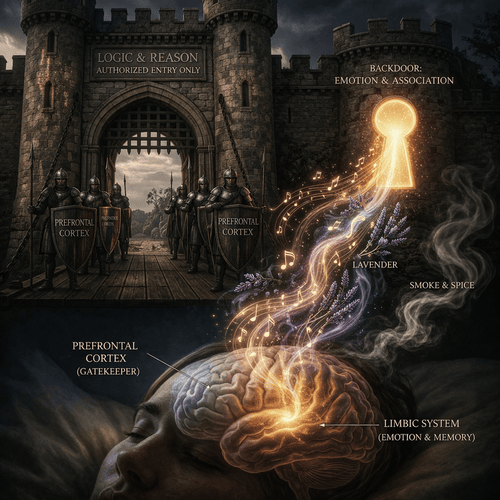
Logic is a stubborn guard; confront it head‑on with facts and the mind raises its drawbridge. People resist being told they’re wrong, but the psychological back door – sensory and emotional resonance – remains unguarded. The strategist doesn’t push; they slip through the channels logic can’t police.
Art, music, and scent are master keys to the psyche. A melody can bypass rational filters and unlock decades‑old memory; a sensory cue can trigger safety or urgency before thought intervenes. The strategist evokes rather than argues, planting ideas that feel self‑generated – influence without confrontation.
This bypass works because it targets the limbic system, which feels before it thinks. While the prefrontal cortex scrutinizes arguments, emotional triggers act automatically, creating responses the subject cannot avoid. Mastering this shifts you from persuader to conductor: people don’t walk through your door – they drift through it without noticing. It is influence achieved not by pressure, but by shaping the emotional current that carries them forward without resistance.
The Escapist’s Exit: The Sovereignty of the Off-Ramp
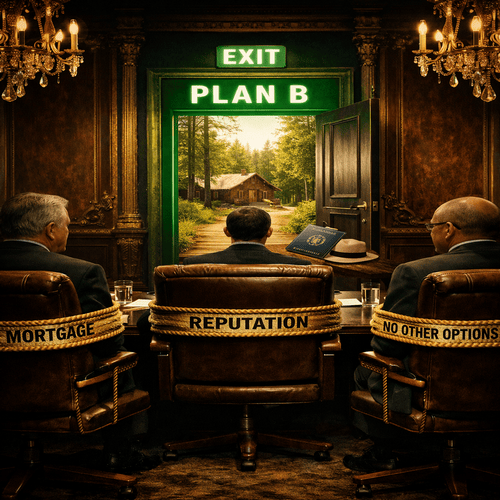
The internal back door is the personal Plan B every high‑performer keeps close – the hidden passport, the liquidity buffer, the mental cabin in the woods. The real trap is feeling “all in” with no exit. Without a back door, you’re captive; with one, you operate with a fearlessness born from choice rather than obligation.
This emergency exit is not cowardice but power. The moment you know you can leave the room, the job, or the commitment when the terms shift, you negotiate differently. True freedom is knowing the exit before you sit down.
This off‑ramp becomes a psychological pressure valve. When you know you can pivot careers, relocate, or reset your life entirely, the gatekeepers at the front door lose their leverage. Your BATNA is always a quiet exit through the rear – the ultimate insurance for the soul, ensuring that no matter how crowded the lobby becomes, you always have access to open air. It is the safeguard that turns every commitment into a choice rather than a cage, preserving the autonomy that high‑performers treat as non‑negotiable.
The End of the Permission Age
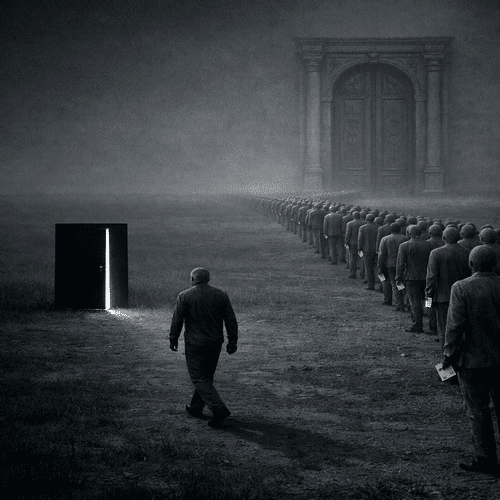
The world is full of people waiting in line, convinced that permission is the price of progress. They treat the queue as legitimacy, as if endurance itself were proof of worth. The social script tells them to wait for a nod instead of looking for an opening.
The real breakthroughs happen in the quiet corridors where innovation moves without announcement. The back door isn’t a shortcut but a declaration of independence – a refusal to be governed by the bottlenecks built for the majority. Stop asking for the key. Look for the gap in the code, the pivot in the strategy, the warmth in the connection. The front door is a ritual; the back door is reality.
The internal back door is the discipline of keeping part of yourself unclaimed by roles or expectations. It’s the private corridor no obligation can follow. This isn’t detachment but structural independence – the calm of someone who can step sideways at any moment. That freedom reads as confidence because it cannot be cornered. It is the inner architecture that lets you move through the world without ever mistaking external structures for your own limits.
What’s More



The posts in My Blog feature reflective, story-driven pieces rooted in personal and societal insights. The topics in My Interests explore abstract, philosophical ideas and their cultural and social impact. The lines in My Quotes share brief reflections that highlight clear insights shaped by lived experience. Subscribe to get Site Updates and be notified whenever new content is published.
👁️ 9,463 Views