Author: Eric Roth

  • Dawn & Dusk

    Dawn & Dusk

    The Dawn

    Dawn refers to the transition from night to day as the sky gets brighter and the morning twilight heralds the beginning of a new day. It has both colloquial and scientific definitions. Scientifically, dawn is marked by the solar elevation angle, which is the position of the Sun in relation to the horizon. Each phase of dawn signifies a different level of sunlight and has specific applications in both scientific and everyday contexts.

    As with dusk, astronomers differentiate between 3 different stages of dawn, each marking the beginning of 1 of the 3 phases of morning twilight:

    • Civil dawn – the geometric center of the Sun’s disk is  below the horizon.
    • Nautical dawn – the geometric center of the Sun’s disk is 12° below the horizon.
    • Astronomical dawn – the geometric center of the Sun’s disk is 18° below the horizon.
    • Civil Dawn → Civil dawn, the brightest instance of dawn, occurs when the geometric center of the Sun’s disk is below the horizon. If the sky is clear, it is now enveloped in bright orange and yellow colors. At this point, only the brightest stars and planets, like Venus and Jupiter, are visible to the naked eye. Even on a cloudy morning, there is now probably enough indirect natural light to make it possible to carry out most outdoor activities without artificial lighting. This moment marks the beginning of civil twilight, the period of daybreak just before sunrise. It ends as the upper edge of the Sun touches the horizon.
    • Nautical Dawn → At nautical dawn, the geometric center of the Sun’s disk reaches an angle of 12° below the horizon. The sunlight reflected by the atmosphere is now generally sufficient to distinguish the sky from land or water in clear weather conditions. As the horizon becomes faintly visible during this stage, seafarers can use it as a reference point when navigating by the stars. Nautical dawn rings in the period of nautical twilight, which ends at civil dawn.
    • Astronomical Dawn → When the Sun passes the elevation angle of 18° below the horizon as it ascends towards the horizon before sunrise, a very small portion of its rays begin to permeate the firmament. The Earth’s upper atmosphere begins to scatter and reflect the sunlight, illuminating the lower atmosphere. However, at this point, the twilight is so faint that it is generally indistinguishable from night, especially in areas with light pollution. Astronomers may be unable to observe some of the fainter stars and galaxies as the Sun passes this mark. Astronomical dawn marks the beginning of astronomical twilight, which lasts until nautical dawn.

    The Dusk

    Dusk generally refers to the transition from day to night, and the term is often used as another word for evening twilight. However, there is a formal definition that is more specific. As with dawn, scientists define dusk as specific moments in time based on the solar elevation angle, which is the position of the Sun in relation to the horizon. Each phase of dusk signifies a different level of sunlight and has specific applications in both scientific and everyday contexts.

    There are 3 stages of dusk, each marking the end of 1 of the 3 phases of evening twilight:

    • Civil dusk – the geometric center of the Sun’s disk is  below the horizon.
    • Nautical dusk – the geometric center of the Sun’s disk is 12° below the horizon.
    • Astronomical dusk – the geometric center of the Sun’s disk is 18° below the horizon.
    • Civil Dusk → Civil dusk is when the geometric center of the Sun’s disk goes below the horizon. It marks the end of civil twilight, which begins at sunset. At this moment, the Earth’s atmosphere still reflects a large portion of sunlight, coloring a clear sky in different shades of orange and red. This is a good time for photographers to capture the sky and the soft glow of the sunlight. Beyond this point, artificial light is generally needed to carry out most outdoor activities. The brightest stars and planets, like Venus and Jupiter, are now visible to the naked eye and more celestial bodies begin to appear in the sky.
    • Nautical Dusk → At nautical dusk, the Sun is 12° below the horizon. It marks the end of nautical twilight. In clear weather conditions, it is now becoming difficult to distinguish the sky from land or water, making it impossible for sailors to use the horizon as a reference point when navigating by the stars. Most stars and constellations are now visible to the naked eye.
    • Astronomical Dusk → This moment is the official beginning of night time. The Sun is now 18° below the horizon and the last shimmer of daylight has left the sky. Even before astronomical dusk, during the period of astronomical twilight, the sky may look completely dark. However, even the small portion of sunlight that is still scattered across the sky before the moment of astronomical dusk may hinder astronomers from observing some of the fainter stars and galaxies.

    Religious Significance
    As the beginning of a new day, dawn has a special significance in many of the world’s Religions. However, the definition of the term varies from one faith and religious community to another.

    For example, Muslims are required to offer the Fajr prayer, which is one of the five obligatory daily prayers in Islam constituting one of the Five Pillars of the Islamic faith, during the morning twilight period. Even within Islam, however, there are differing opinions about the correct moment for the prayer. The Jewish Holy Scripture also dictates dawn as a time for prayer.

    The Talmud defines dawn as the moment 72 minutes before sunrise. However, some Jewish communities claim that this definition pertains only to the situation in Mesopotamia on the days of the equinoxes. These groups calculate the correct moment of dawn for each day and location, based on a solar elevation angle of 16.1 degrees below the horizon.

    While it is common for Christians and adherents of other faiths to offer a prayer in the evening, Islam specifically defines dusk as the proper moment for the Maghrib evening prayer. It is one of the five obligatory daily prayers, which together constitute one of the Five Pillars of Islam. During the Islamic month of Ramadan, Muslims are required to fast from dawn to the break of night. The iftar is an evening meal that occurs at dusk, when fasters are allowed to eat again.

    What About Twilight?

    While it’s common to confuse twilight with dusk and dawn, they are different events. Dusk and dawn occur when the Sun’s center is at the exact point below the horizon; twilight occurs between these points. For example, when the Sun is exactly 18° below the horizon – it’s called astronomical dusk (or dawn), but the interval from 12° to 18° is astronomical twilight.

    So, twilight is a time of the day when the Sun is below the horizon and not visible directly but partially illuminates the sky. We can see twilight because the Earth has an atmosphere where the light partially scatters and illuminates our planet even when the Sun is gone. The twilight duration depends on the latitude, time of year, and weather conditions. The shortest twilight is observed at the equator, where darkness falls 24 minutes after sunset; the longest one can last about six weeks at the poles.

    There are three types of twilight – civil, nautical, and astronomical. They follow each other and occur in the same order all over the Earth. The twilight types vary depending on the Sun’s center position below the horizon:

    • Civil twilight: 0 – 6°
    • Nautical twilight: 6 – 12°
    • Astronomical twilight: 12 – 18°

    The time between astronomical twilight, when the Sun is 18° or further down below the horizon, is called the night.

    • Civil Twilight → The civil twilight is the brightest phase; most people refer to this type when talking about twilight. It starts right before sunrise or after sunset when the Sun is just below the horizon. The horizon should be well seen during this time, and only the brightest stars and planets are visible. Right after sunset, the sky is very bright and full of rapid colors.
    • Nautical Twilight → The nautical twilight is the second phase when the horizon becomes challenging to distinguish. The term itself came from the times when sailors used the stars to navigate at sea. During nautical twilight, many of the stars are visible, making it possible to navigate according to the position of the stars.
    • Astronomical Twilight → When the darkness is almost complete, and the horizon isn’t discernible, it means that the astronomical twilight is here. The Milky Way starts to appear, and the faintest stars and planets can be observed with the naked eye unless the Moon illuminates the sky. However, galaxies, nebulae, and globular clusters require full darkness when the Sun is more than 18° under the horizon.

    What’s More

    The posts in My Blog feature reflective, story-driven pieces rooted in personal and societal insights.

    The topics in My Interests explore abstract, philosophical ideas and their cultural and societal impact.

  • No Public Access

    Lost Places

    The lesser you know, the more you want it. That saying is so true! Given the evolution of technology, we can know anything and everything in the click of a button. In times like these, we may wonder what are the parts of the world that are still yet to be discovered or ones that still remain a mystery to mankind. These forgotten corners of the world not only tell lost narratives but also invoke curiosity in explorers and adventurers.

    There are also unbelievable and amazing places that you wouldn’t believe actually exist! The places in the video are not from some distant planet, they are places that exist on Earth.

    15 Unbelievable Places That Actually Exist – by Top Fives

    Lost Places

    Lascaux Caves, France

    The Lascaux Cave is a treasure trove for archaeologists around the globe. The cave complex contains pre-historic paintings that are 17,300 years old. The series of Paleolithic paintings that looks hauntingly vivid hugs the wall and depict animals like cattle, stags, bison and many more. Sadly, the cave is closed to the general public since 1963. Archaeologists believe that human presence might destroy the ancient work of art.

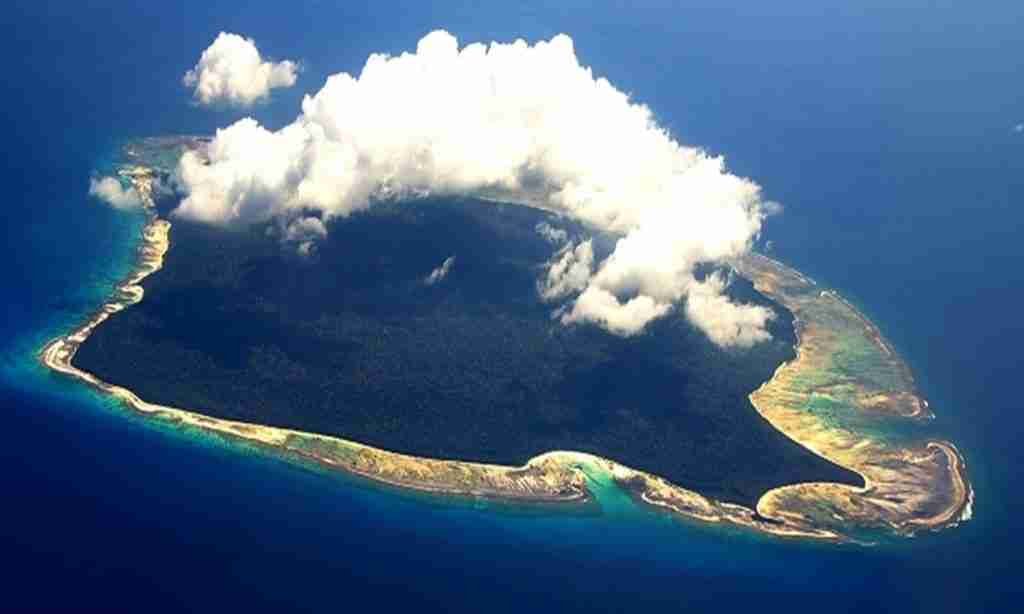
    North Sentinel Island, India

    Home to the Sentinelese tribe, the North Sentinel Island in the Andaman chain is one of the forbidden islands in the world. The people inhabiting the island often get violent to safeguard their isolation. The Sentinelese tribe have lived on the island for over 50,000 years under the protection of the Indian Government. This region is strictly prohibited for visitors of any kind and is one of the most dangerous and forbidden places in the world.

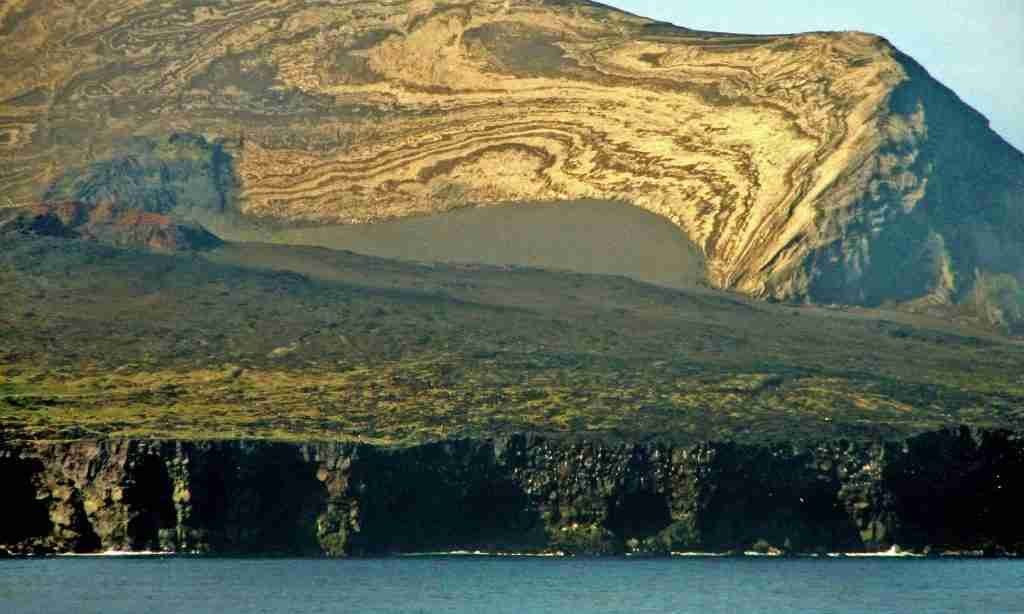
    Surtsey Island, Iceland

    Surtsey is a little island located in an archipelago off the southern coast of Iceland. It was formed as a result of a volcanic eruption that lasted for four years. Surtsey also has the reputation of being the newest island on the planet. Currently, it is open to a few scientists and geologists. This forbidden island is off-limits for tourists as it is believed that human interference will disrupt the ecological succession taking place on the island.

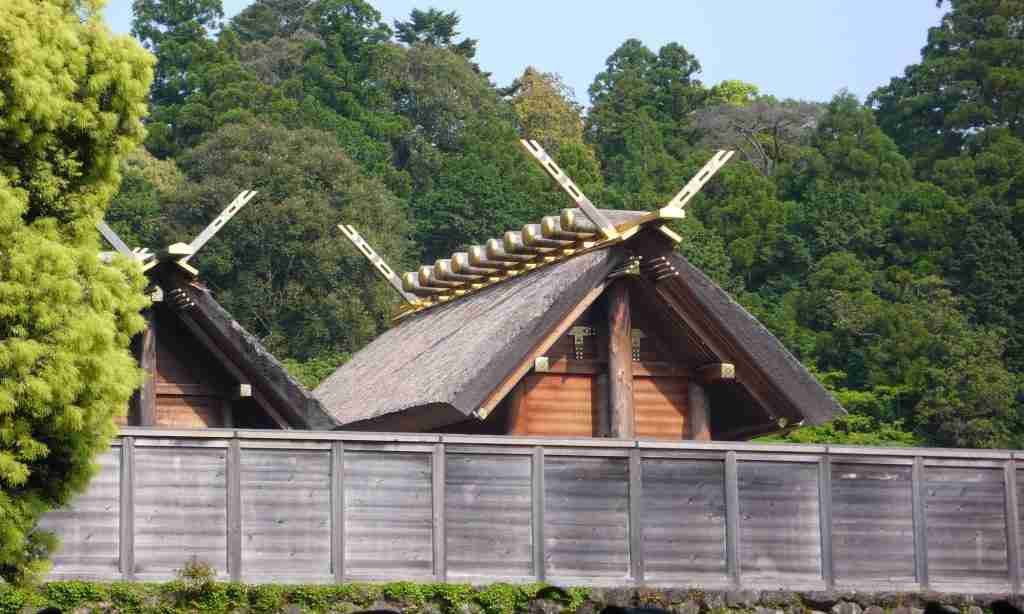
    Ise Grand Shrine, Japan

    Japan is globally popular for its shrine culture and houses approximately 80,000 shrines. The most important among all is the Ise Grand Shrine. It is one of the most expensive temples in Japan due to its architectural grandeur. To maintain the Shinto traditions dating back to the 8th century, this temple is rebuilt every 20 years. And that comes with a million-dollar price tag. Unless you are a member of the royal family, you are forbidden to enter the hallowed halls of this ancient Japanese representation.

    North Brother Island, USA

    Located in New York City, North Brother Island is one of the most popular abandoned places in the USA. Originally developed as a quarantine hospital, it was the home to the Typhoid Mary. She was identified as the first American to carry the typhoid fever. Later, this place became a rehabilitation centre for drug addicts. Now, North Brother Island has a bird sanctuary and is permanently shut for the common people.

    Dulce Base, USA

    Dulce is a quaint town situated near the Colorado border in New Mexico. With a population of 2,600 Native Americans, this town serves an underground laboratory where unbelievable experiments take place. It is said that the Dulce Base is a massive hidden compound that houses incredibly advanced technologies and human-animal hybrids. This base has very tight security and is regarded as one of the top forbidden places in the World and in the USA.

    Heard Island, Australia

    One of the most unexplored places on the Earth, Heard Island lies between Antarctica and Madagascar. Politically, this island is a part of Australia. There are two active volcanoes on the Heard Island, and it is completely barren. The entire island is composed of debris and limestone that took place as a result of volcanic eruptions. To preserve the fragile natural surroundings, the Australian Government restricted entry to the forbidden island.

    Doomsday Vault, Norway

    The Doomsday Vault is a seed bank situated in the heart of the Arctic Svalbard archipelago. This is a secure vault that preserves a variety of plant seeds. It is an attempt to safeguard the seeds in case of an apocalypse or global crisis. From every nook and corner of the globe, crates of seeds are sent to the Doomsday Vault for long-term storage. The vault is only open to special guests on specific days.

    Snake Island, Brazil

    As the name suggests, this is an island in Brazil infested with thousands of deadly snakes. No human even dare to tread on Snake Island, and it is even regarded as the most forbidden places in the world and in Brazil. In fact, it is so dangerous that the government has made it illegal to visit the island. It is estimated that there are approximately 4,000 golden lanceheads on the island – the deadliest serpents on the planet.

    Area 51, USA

    Area 51 in Southern Nevada is always wrapped in conspiracy theories. It is a US military base and has the reputation of being the testing ground for weapons and aircraft. But there is wider speculation about the same. Conspiracy theorists believe that the officials conceal alien evidence at the base. It is totally off-limits to the commoners, and even the USA barely acknowledges the existence of Area 51.

    Tomb Of Qin Shi Huang, China

    The Mausoleum of China’s first Emperor Qin Shi Huang is buried deep underneath a pyramid for more than 2,000 years. It is one of the greatest discoveries of all times but remains a mystery for historians and archaeologists. The contents of the tomb are mostly sealed and unexplored. It is said that the burial complex comprises of various things that Qin Shi Huang will need in the afterlife. To pay respect to the ancient site, the Chinese Government has prohibited excavation of the Tomb of Qin Shi Huang and is one the most forbidden places in the world.

    Pravcicka Brana, Czech Republic

    One of the most spectacular landmarks of Czech Republic, Pravcicka Brana is the biggest sandstone arch in Europe. Till 1982, this landmark attracted tourists from far and near. Later, to minimise erosion, people are restricted to visit the arch. However, geologists think that this natural sandstone arch of Pravcicka Brana would soon collapse and hence it makes it a forbidden place.

    Niihau Island, USA

    Niihau Island, with a population of 160 inhabitants, is prohibited to the general public. The only way to visit this region is either to be a part of the US Navy or to have a relative on the island. To preserve the environment and wildlife on Niihau Island, the government has restricted the entry to outsiders. No wonder, it is a forbidden place that one cannot reach.

    Maya Bay, Thailand

    Maya Bay is part of Phi Phi Leh island, which is located in the Andaman Sea of Thailand, about 40 kilometers (25 miles) southeast of Phuket and about the same distance from Krabi. Access to Maya Bay, made famous in Hollywood film The Beach starring Leonardo DiCaprio, was restored in 2022 with certain strict conditions. Most importantly, boats can no longer approach the beach itself but instead must enter through Loh Sam Bay in the back of Maya Bay.

    The allure of lost and forbidden places often stems from human curiosity. Travelers are increasingly fascinated by the beauty and desolation of abandoned towns, like Pripyat in Ukraine or the ghost town of Cobalt in Canada. These sites evoke feelings of nostalgia, as visitors ponder the lives once lived among their crumbling structures. Ultimately, exploring these places provides a unique lens through which we can reflect on history, culture, and the passage of time. Moreover, the eerie silence and the remnants of a once-thriving past instill a profound sense of mystery and wonder, inviting us to imagine stories that have long been forgotten.

    What’s More

    The posts in My Blog feature reflective, story-driven pieces rooted in personal and societal insights.

    The topics in My Interests explore abstract, philosophical ideas and their cultural and societal impact.
  • Four Seasons

    Four Seasons

    Seasons are periods of the year with distinct weather conditions and day lengths. The four seasons – winter, spring, summer, fall (autumn) – can vary significantly in characteristics and can prompt changes in the world around them. Here, we explore the seasons of the year in more detail. Attributes of the seasons may vary by location, but there are still broad definitions that cross most of the boundaries.

    Winter

    Winter is the coldest season of the year and occurs when a hemisphere is oriented away from the Sun, often bringing a chill. Some areas may experience snow or ice, while others see only cold rain. Animals find ways to warm themselves and may have changed their appearance to adapt.

    Summer

    In the summer, temperatures may increase to the hottest of the year. If they spike too high, heat waves or droughts may cause trouble for people, animals, and plants. Rainfall may increase in some areas, as well. Others may receive less water, and forest fires may become more frequent.

    Spring

    In the spring, seeds take root and vegetation begins to grow. The weather is warmer and often wetter. Animals wake or return from warmer climates, often with newborns. Melting snow from the previous season, along with increased rainfall, can cause flooding along waterways.

    Fall (Autumn) *

    In the autumn, or fall, temperatures cool again. Plants may begin to grow dormant. Animals might prepare themselves for the upcoming cold weather, storing food or traveling to warmer regions. Various cultures have celebrated bountiful harvests with annual festivals.

    * = Both ‘autumn’ and ‘fall’ are words used in the English language to describe the season that starts on 1 September in the Northern Hemisphere, with fall being commonly used in American English. The word autumn comes from the old French word ‘autompne’, which itself originated from the Latin ‘autumnus’. The roots of the Latin name are obscure, but it was first recorded in the English language from the late 1300s.

    Causes Of Seasons

    The cycle of seasons is caused by our planet’s tilt toward the sun. The Earth spins around an (invisible) axis. At different times during the year, the Northern or Southern axis is closer to the sun. During these times, the hemisphere tipped toward the star experiences summer, while the hemisphere tilted away from the sun experiences winter.

    At other locations in Earth’s annual journey, the axis is not tilted toward or away from the sun. During these times of the year, the hemispheres experience spring and autumn.

    The astronomical definition of the seasons relates to specific points in Earth’s trip around the sun. The summer and winter solstice, the longest and shortest day of the year, occurs when Earth’s axis is either closest or farthest from the sun. The summer solstice in the Northern Hemisphere occurs around June 21, the same day as the winter solstice in the Southern Hemisphere. The South’s summer solstice occurs around December 21, the winter solstice for the North. In both hemispheres, the summer solstice marks the first day of astronomical summer, while the winter solstice is considered the first day of astronomical winter.

    Equinoxes are another significant day during Earth’s journey around the sun. On these days, the planet’s axis is pointed parallel to the sun, rather than toward or away from it. Day and night during the equinoxes are supposed to be close to equal. The spring, or vernal, equinox for the northern hemisphere takes place around March 20, the same day as the South’s autumnal equinox. The vernal equinox in the southern hemisphere occurs around September 20, when people in the North celebrate the autumnal equinox. The vernal equinox marks the first day of astronomical spring for a hemisphere, while the autumnal equinox ushers in the first day of fall.

    But changes in the weather often precede these significant points. The meteorological seasons focus on these changes, fitting the seasons to the three months that best usher them in. December to February marks meteorological winter in the Northern Hemisphere and meteorological summer in the southern. March, April, and May are lauded as spring or autumn, depending on the location, while June through August are the months of summer for the north and winter for the south. September, October, and November conclude the cycle, ushering in fall in northern regions and spring in southern.

    The seasons can bring a wide variety to the year for those locations that experience them in full. The weather in each one may allow people to engage in activities that they cannot perform in others – skiing in the winter, swimming in the summer. Each season brings with it its own potential dangers, but also its own particular brand of beauty.

    Mother Nature

    Mother Nature (sometimes known as Mother Earth or the Earth Mother) is a personification of nature that focuses on the life-giving and nurturing aspects of nature by embodying it, in the form of the mother.

    Omnipotence – Mother Nature can achieve and do absolutely anything without any limit or condition. She possesses all powers and everything beyond her, existing on level inconceivably above / beyond any other power / concept. Hurricanes, droughts, floods, volcanic eruptions are all Mother Nature ‘s way of stirring up the pot to prevent stagnation and putrefaction.

    Antonio Lucio Vivaldi

    Vivaldi’s Four Seasons are four violin concertos depicting the seasons of spring, summer, autumn, and winter. They are some of the most extravagant examples of music that tells a story (“program music”) from the baroque period. Each concerto is accompanied by a sonnet, possibly written by Vivaldi himself, that describes the scenes and events of each season, adding a literary dimension to the musical experience. These concertos are celebrated for their vivid imagery and technical brilliance, showcasing Vivaldi’s mastery in capturing the essence of each season through music.

    Vivaldi Four Seasons 10 Hours – by Classical Music

    Antonio Lucio Vivaldi (4 March 1678 – 28 July 1741) was an Italian composer, virtuoso violinist and impresario of Baroque music. Along with Johann Sebastian Bach and George Frideric Handel, Vivaldi ranks amongst the greatest Baroque composers and his influence during his lifetime was widespread across Europe, giving origin to many imitators and admirers. His innovative compositions, particularly “The Four Seasons,” continue to captivate audiences and shape the landscape of classical music.

    What’s More

    The posts in My Blog feature reflective, story-driven pieces rooted in personal and societal insights.

    The topics in My Interests explore abstract, philosophical ideas and their cultural and societal impact.
  • Perpetual Calendar

    Perpetual Calendar

    Since the return of the Jews from Babylonian exile, the day of the Easter festival (Pesach, Pasha) is calculated on the basis of the first full moon after the beginning of spring (March 21). The Christians adopted this regulation for their Easter festival.

    The Julian Calendar was adopted at the Council of Nicaea (Decree “computus paschalis”) in 325, and for the Easter date it was for the first time already in 326. Also for Orthodox Christians, the calendar today is still valid but the date must be converted to the “bourgeois” calendar.

    The German mathematician Carl Friedrich Gauß (1777-1855) was able to calculate the Easter date for every year from 1583 to 8201, following the Gregorian Calendar reform in October 1582. His calculations were remarkably precise and have been used as a reference for centuries.

    However, it remains unclear whether the leap year must be dropped in the years 3200 or 3600 to balance the remaining time. This uncertainty highlights the complexity and intricacies involved in calendar calculations, even for a mathematical genius like Gauß.

    His work continues to be a testament to the enduring importance of mathematical precision in our understanding of time and dates.

    The Gregorian Calendar skipped 10 days in October 1582 in order to make up for the extra days which had been accrued under the Julian calendar, and established a more accurate accounting for leap years to avoid the accrual of extra days in the future.

    The Leap Year

    We all know that the leap year comes every 4th year. We also know that a leap year means that where will be a February 29th. This creates the unique situation whereby someone born on February 29th will only have a birthday every 4 years. Often these people celebrate their sudo birthday on February 28th for those other 3 years.

    As you can see from the leap years listed below there are years in which we do not have a leap year. This is as a result of the Gregorian calendar which has us skip a leap year every 100 years to make up for the fact that 11 minutes had to be shaved off the 365.25 year. Historical calendars are more difficult to analyze as different areas of the world adopted the current calendar format at different times. Most countries today use the Gregorian format as opposed to the Julian format. And while we are taught that the leap year being once every four years means that each year is really .25 days longer; the Gregorian calendar accounts for the fact that a year is 11 minutes less than 365.25 days.

    Leap year list from 1900 to 2400:

    1904 • 1908 • 1912 • 1916 • 1920 • 1924 • 1928 • 1932 • 1936 • 1940 • 1944 • 1948 • 1952 • 1956 • 1960 • 1964 • 1968 • 1972 • 1976 • 1980 • 1984 • 1988 • 1992 • 19962000 • 2004 • 2008 • 2012 • 2016 • 2020 • 2024 • 2028 • 2032 • 2036 • 2040 • 2044 • 2048 • 2052 • 2056 • 2060 • 2064 • 2068 • 2072 • 2076 • 2080 • 2084 • 2088 • 2092 • 20962104 • 2108 • 2112 • 2116 • 2120 • 2124 • 2128 • 2132 • 2136 • 2140 • 2144 • 2148 • 2152 • 2156 • 2160 • 2164 • 2168 • 2172 • 2176 • 2180 • 2184 • 2188 • 2192 • 21962204 • 2208 • 2212 • 2216 • 2220 • 2224 • 2228 • 2232 • 2236 • 2240 • 2244 • 2248 • 2252 • 2256 • 2260 • 2264 • 2268 • 2272 • 2276 • 2280 • 2284 • 2288 • 2292 • 22962304 • 2308 • 2312 • 2316 • 2320 • 2324 • 2328 • 2332 • 2336 • 2340 • 2344 • 2348 • 2352 • 2356 • 2360 • 2364 • 2368 • 2372 • 2376 • 2380 • 2384 • 2388 • 2392 • 23962400

    How to know if it is a leap year:

    • leap years are any year that can be evenly divided by 4 (such as 2012, 2016, etc)
    • except if it can be evenly divided by 100, then it isn’t (such as 2100, 2200, etc)
    • except if it can be evenly divided by 400, then it is (such as 2000, 2400)

    Some Models

    Perpetual Calendar by Clayton Boyer
    Perpetual Calendar by Bernard Vuarnesson
    Perpetual Calendar by Andrei Erdei
    Perpetual Calendar by Gideon Dagan
    Perpetual Calendar by Steve Ramsey

    The Mechanism

    Mechanism explained by A. Lange & Söhne
    Mechanism explained by SalonQP Magazine

    The Limits

    A perpetual calender works in the same way as any calendar… it just does so for a loooooooooong period of time. Perpetual after all is a conceptual theory. No one has ever been able to actually put a measure to the concept of perpetual. Seeing that, to measure perpetual, it would have to end at some point and therefore was no longer perpetual. Hence totally killing the idea of Perpetual.

    Download

    A perpetual calendar (CH) according to C. F. Gauß reconstructed in Excel format. This downloadable Perpetual Calendar accurately calculates for the period between the years 326 to 3000. For the years before and after: No guarantee. Please enter the desired year in the cell next to where it says “Eingabejahr”. You will also find a sheet with all the Swiss public holidays listed as well as a 10000-year calendar in English.

    What’s More

    The posts in My Blog feature reflective, story-driven pieces rooted in personal and societal insights.

    The topics in My Interests explore abstract, philosophical ideas and their cultural and societal impact.
  • AlphanumERIC – Aslant

    AlphanumERIC

    AlphanumERIC (sometimes seen as alphamERIC) is a combination of alphabetic and numERIC characters, and is used to describe the collection of Latin letters and Arabic digits or a text constructed from this collection.

    In layouts designed for English language users, alphanumeric characters are those comprised of the combined set of the 26 alphabetic characters, A to Z…

    Alfa, Bravo, Charlie, Delta, Echo, Foxtrot, Golf, Hotel, India, Juliett, Kilo, Lima, Mike, November, Oscar, Papa, Quebec, Romeo, Sierra, Tango, Uniform, Victor, Whiskey, X-ray, Yankee, Zulu

    …and the 10 Arabic numerals, 0 to 9.

    Go decrypt this Encrypted number code. Click “Copy Me” and bring it along to Decrypt by pasting it into “Your Message”. Of course, the operating mode, you choose would be “Decrypt“.


    The Challenge

    Watch the AlphanumERIC Challenge and analyze what is and isn’t possible in combination.

    In this alphanumERIC, the sum of two two-digit numbers is also a two-digit number:

    • If A, B and C are distinct digits (A≠B≠C), how many distinct ordered tripples (A,B,C) are there that satisfy this equation: AB+AB=CC?

    The Bases

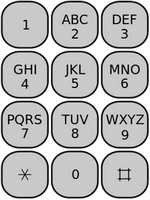
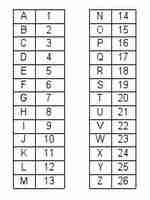
    Depending on the alphanumERIC base (e.g. the Scrabble letter distributions, a simple Keypad or even simplier, the English alphabet) one chooses, the name ERIC results in the number total of either 6, 7 or 8:

    Scrabble Letters


    ERIC = 1 1 1 3
    → 1+1+1+3 = 6

    Keypad


    ERIC = 3 7 4 2
    → 3+7+4+2 = 16
    → 1+6 = 7

    English Alphabet


    ERIC = 5 18 9 3
    → 5+18+9+3 = 35
    → 3+5 = 8

    Of course, in Numerology, these numbers do have a meaning. Find out more about it in my Kudos Archive (the term Endorsemonial does not exist – I just made it up and it’s a playful word combination of Endorsement and Testimonial)

    Interface Subsets

    When a string of mixed alphabets and numerals is presented for human interpretation, ambiguities arise. The most obvious is the similarity of the letters I, O and Q to the numbers 1 and 0. Therefore, depending on the application, various subsets of the alphanumeric were adopted to avoid misinterpretation by humans.

    • In passenger aircrafts, aircraft seat maps were designated by row number followed by column letter. For wide bodied jets, the seats can be 10 across, labeled ABC-DEFG-HJK. The letter I is skipped to avoid confusion with row number 1.
    • In vehicle identification numbers used by motor vehicle manufacturers, the letters I, O and Q are omitted for their similarity to 1 or 0.
    • Tiny embossed letters are used to label pins on an electrical connectors. The letters I, O, Q, S and Z were dropped to ease eye strain with 1, 0, 5, 3,and 2. That subset is named the DEC Alphabet after the company that first used it.
    • For alphanumerics that are frequently handwritten, in addition to I and O, V is avoided because it looks like U in cursive, and Z for its similarity to 2.

    The Binary Code

    A code that uses just 2 symbols to represent information is considered binary code.

    Different versions have been around for centuries and used in a variety of contexts.

    Perhaps the most common use for binary nowadays is in computers: Binary code is the way that most computers and computerized devices ultimately send, receive and store information.

    Morse Code

    The Morse Code (see Chart of the Morse Code 26 Letters and 10 Numerals) was developed by Samuel Morse in the 1800s when he worked with an electrical telegraph system sending pulses of electric current and an electromagnet. His code used the pulse and breaks between them to transmit information. Popular with amateur radio operators, this code is no longer required if you want to get a U.S. pilots or air traffic controller license, though these individuals often have a basic understanding of the code.

    An observer can understand Morse code without special equipment which can be an advantage in, for example, an emergency situation. This code can also be useful when poor signal conditions exist, and the human voice is difficult to decode. While this code covers the basic Latin alphabet and Arabic numerals, extensions to the code cover languages that use more than the Latin alphabet letters.

    Try this: A Morse Code Translator

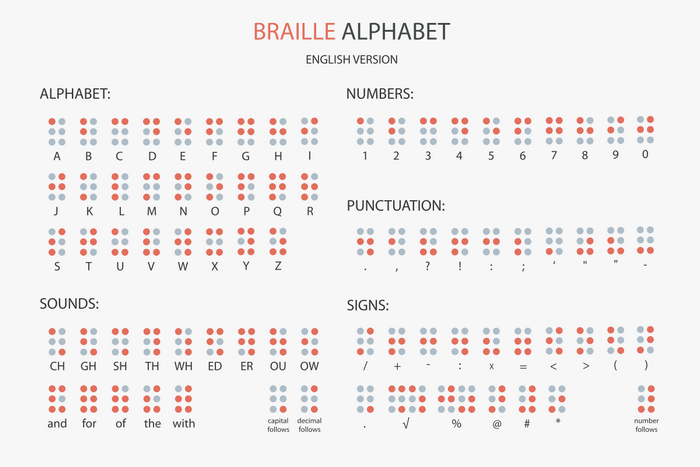
    Braille Alphabet

    Braille is a system of raised dots that can be read with the fingers by people who are blind or who have low vision.

    Braille is not a language. Rather, it is a code by which many languages may be written and read.

    Braille is used by thousands of people all over the world in their native languages and provides a means of literacy for all.

    Try this: A Braille Alphabet Translator

    Braille symbols are formed within units of space known as braille cells, each consisting of six raised dots arranged in two parallel rows of three. The dot positions are numbered from one to six, allowing for sixty-four combinations. A single cell can represent a letter, number, punctuation mark, or even a whole word.

    Louis Braille, born in Coupvray, France, on January 4, 1809, attended the National Institute for Blind Youth in Paris. At that time, books were created using raised print, which was laborious to produce and hard to read. While at the Institute, Braille sought to create an alphabet easy to read with fingertips. At age fifteen, he invented the braille system, evolving it from Charles Barbier‘s tactile “Ecriture Nocturne” code for reading military messages in the dark.

    What’s More

    The posts in My Blog feature reflective, story-driven pieces rooted in personal and societal insights.

    The topics in My Interests explore abstract, philosophical ideas and their cultural and societal impact.

  • Lorem Ipsum

    Lorem Ipsum

    Lorem Ipsum has become simply dummy text of the printing and typesetting industry and has been so ever since the 1500s, when an unknown printer took a galley of type and scrambled it to make a type specimen book.

    The Standard Phrase

    Lorem ipsum dolor sit amet, consectetur adipiscing elit, sed do eiusmod tempor incididunt ut labore et dolore magna aliqua. Ut enim ad minim veniam, quis nostrud exercitation ullamco laboris nisi ut aliquip ex ea commodo consequat. Duis aute irure dolor in reprehenderit in voluptate velit esse cillum dolore eu fugiat nulla pariatur. Excepteur sint occaecat cupidatat non proident, sunt in culpa qui officia deserunt mollit anim id est laborum.”

    It has survived not only five centuries, but also the leap into electronic typesetting, remaining essentially unchanged. It was popularised in the 1960s with the release of Letraset sheets containing Lorem Ipsum passages, and more recently with desktop publishing software like Aldus PageMaker including versions of Lorem Ipsum.

    The Usefulness

    Dummy text is also used to demonstrate the appearance of different typefaces and layouts, and in general the content of dummy text is nonsensical.

    Due to its widespread use as filler text for layouts, non-readability is of great importance: human perception is tuned to recognize certain patterns and repetitions in texts.

    If the distribution of letters and ‘words’ is random, the reader will not be distracted from making a neutral judgement on the visual impact and readability of the typefaces (typography), or the distribution of text on the page (layout or type area).

    For this reason, dummy text usually consists of a more or less random series of words or syllables. This prevents repetitive patterns from impairing the overall visual impression and facilitates the comparison of different typefaces. Furthermore, it is advantageous when the dummy text is relatively realistic so that the layout impression of the final publication is not compromised.

    The Origins

    Lorem ipsum comes from sections 1.10.32 and 1.10.33 of “De Finibus Bonorum et Malorum” (The Extremes of Good and Evil) by Marcus Tullius Cicero, written in 45 BC. This book is a treatise on the theory of ethics, very popular during the Renaissance.

    The passage lorem ipsum is taken from text that reads “Neque porro quisquam est qui dolorem ipsum quia dolor sit amet, consectetur, adipisci velit …” which roughly translates as “There is no one who loves pain itself, who seeks after it and wants to have it, simply because it is pain…”

    “Neque porro quisquam est qui dolorem ipsum quia dolor sit amet, consectetur, adipisci velit. -> There is no one who loves pain itself, who seeks after it and wants to have it, simply because it is pain.”

    – Marcus Tullius Cicero
    In (Original) Latin Language

    “Sed ut perspiciatis unde omnis iste natus error sit voluptatem accusantium doloremque laudantium, totam rem aperiam, eaque ipsa quae ab illo inventore veritatis et quasi architecto beatae vitae dicta sunt explicabo. Nemo enim ipsam voluptatem quia voluptas sit aspernatur aut odit aut fugit, sed quia consequuntur magni dolores eos qui ratione voluptatem sequi nesciunt. Neque porro quisquam est, qui dolorem ipsum quia dolor sit amet, consectetur, adipisci velit, sed quia non numquam eius modi tempora incidunt ut labore et dolore magnam aliquam quaerat voluptatem. Ut enim ad minima veniam, quis nostrum exercitationem ullam corporis suscipit laboriosam, nisi ut aliquid ex ea commodi consequatur? Quis autem vel eum iure reprehenderit qui in ea voluptate velit esse quam nihil molestiae consequatur, vel illum qui dolorem eum fugiat quo voluptas nulla pariatur? At vero eos et accusamus et iusto odio dignissimos ducimus qui blanditiis praesentium voluptatum deleniti atque corrupti quos dolores et quas molestias excepturi sint occaecati cupiditate non provident, similique sunt in culpa qui officia deserunt mollitia animi, id est laborum et dolorum fuga. Et harum quidem rerum facilis est et expedita distinctio. Nam libero tempore, cum soluta nobis est eligendi optio cumque nihil impedit quo minus id quod maxime placeat facere possimus, omnis voluptas assumenda est, omnis dolor repellendus. Temporibus autem quibusdam et aut officiis debitis aut rerum necessitatibus saepe eveniet ut et voluptates repudiandae sint et molestiae non recusandae. Itaque earum rerum hic tenetur a sapiente delectus, ut aut reiciendis voluptatibus maiores alias consequatur aut perferendis doloribus asperiores repellat.”

    English Translation

    “But I must explain to you how all this mistaken idea of denouncing pleasure and praising pain was born and I will give you a complete account of the system, and expound the actual teachings of the great explorer of the truth, the master-builder of human happiness. No one rejects, dislikes, or avoids pleasure itself, because it is pleasure, but because those who do not know how to pursue pleasure rationally encounter consequences that are extremely painful. Nor again is there anyone who loves or pursues or desires to obtain pain of itself, because it is pain, but because occasionally circumstances occur in which toil and pain can procure him some great pleasure. To take a trivial example, which of us ever undertakes laborious physical exercise, except to obtain some advantage from it? But who has any right to find fault with a man who chooses to enjoy a pleasure that has no annoying consequences, or one who avoids a pain that produces no resultant pleasure? On the other hand, we denounce with righteous indignation and dislike men who are so beguiled and demoralized by the charms of pleasure of the moment, so blinded by desire, that they cannot foresee the pain and trouble that are bound to ensue; and equal blame belongs to those who fail in their duty through weakness of will, which is the same as saying through shrinking from toil and pain. These cases are perfectly simple and easy to distinguish. In a free hour, when our power of choice is untrammelled and when nothing prevents our being able to do what we like best, every pleasure is to be welcomed and every pain avoided. But in certain circumstances and owing to the claims of duty or the obligations of business is will frequently occur that pleasures have to be repudiated and annoyances accepted. The wise man therefore always holds in these matters to this principle of selection: he rejects pleasures to secure other greater pleasures, or else he endures pains to avoid worse pains.”

    Need Your Own?

    There are many variations of passages of Lorem Ipsum available, but the majority have suffered alteration in some form, by injected humour, or randomised words which don’t look even slightly believable. If you are going to use a passage of Lorem Ipsum, you need to be sure there isn’t anything embarrassing hidden in the middle of text.

    All the Lorem Ipsum generators on the Internet tend to repeat predefined chunks as necessary, making lipsum.com the first true generator on the Internet. It uses a dictionary of over 200 Latin words, combined with a handful of model sentence structures, to generate Lorem Ipsum which looks reasonable. The generated Lorem Ipsum is therefore always free from repetition, injected humour, or non-characteristic words etc.

    Lorem Ipsum (by lipsum.com)

    Lorem ipsum dolor sit amet, consectetur adipiscing elit. Nunc at arcu ultricies, tristique neque eu, tempus arcu. Etiam dictum pellentesque justo. Duis id ex non magna rutrum egestas facilisis nec velit. Donec dapibus interdum orci vel condimentum. Integer sed odio et mi auctor pulvinar. Quisque sagittis turpis ligula, at malesuada ligula dignissim eget. Mauris sollicitudin ullamcorper tellus, eu posuere lectus pellentesque vel. Sed a est vel nulla ultrices ultrices sed eu erat. Nunc lectus purus, ultricies a purus condimentum, sollicitudin volutpat nisi. In in varius lacus. Integer bibendum turpis erat, in auctor magna bibendum at. Pellentesque fringilla ex id massa dignissim, vitae placerat eros aliquet. Vivamus orci sem, facilisis ut turpis id, maximus interdum eros. Sed aliquam leo nec odio volutpat auctor.

    In hac habitasse platea dictumst. Nam congue mi in sapien dictum dapibus. Cras vel orci in libero consequat tincidunt ac in nulla. Etiam et fringilla lacus. Integer eu sodales nunc. Donec vel laoreet massa, vel commodo lorem. Vestibulum eget erat suscipit, interdum elit quis, mollis tortor. Donec elementum diam vitae commodo feugiat. Maecenas ac molestie massa. Fusce nec ex nisi. Morbi tincidunt pharetra nunc. Praesent at pretium metus, eu aliquet odio. Ut vel posuere velit. Vestibulum eu est eu arcu eleifend vestibulum nec at lectus.

    Ut ut diam nisi. Mauris eget ante non arcu tincidunt vehicula. Duis sit amet sollicitudin felis. Morbi tincidunt mattis iaculis. Aliquam erat volutpat. Fusce sagittis, lacus id bibendum semper, lectus tortor sollicitudin lacus, nec tempus dolor lorem sit amet turpis. Sed semper neque in nulla viverra tempus. Sed fringilla neque nunc, in ornare elit auctor non. Proin vitae libero fermentum, sagittis nisl a, pretium tellus. Phasellus viverra dignissim accumsan. Proin faucibus egestas nibh ac viverra. Suspendisse lacinia nunc sit amet mauris fringilla, sollicitudin posuere ex ornare.

    Mauris libero ipsum, feugiat quis enim non, sodales efficitur libero. Cras eget turpis a erat euismod sollicitudin. Proin volutpat consectetur eros et varius. Curabitur pellentesque eros ex, non cursus nibh congue non. Pellentesque vitae varius nunc, eget vulputate risus. Nulla nec mollis odio. Sed tempor nibh massa, a pharetra urna pretium non. Nulla in consequat sapien. Phasellus semper volutpat vehicula. Maecenas congue iaculis tempus. Suspendisse pharetra egestas ullamcorper. Nullam erat turpis, tincidunt in vestibulum nec, scelerisque in purus.

    Pellentesque efficitur efficitur urna, et fermentum leo hendrerit in. Suspendisse non ipsum imperdiet, pulvinar magna at, cursus nulla. Proin posuere tempus ipsum, a ultrices purus porta a. Suspendisse dapibus augue vitae libero pretium eleifend. Fusce vehicula interdum nibh, vel imperdiet nisi. In sit amet magna vel orci ultrices laoreet eget non leo. Suspendisse eget lacinia arcu. Etiam finibus rutrum iaculis. Proin imperdiet finibus enim ac vehicula. Etiam nulla urna, finibus vitae risus vel, consectetur mattis erat. Curabitur non massa dictum, malesuada nunc et, ullamcorper tortor. Donec in nunc at arcu ornare porta sit amet porta lectus.

    Samuel L. Ipsum is a Lorem Ipsum generator, it uses quotes from films which Samuel L. Jackson has starred in place of the standard ipsum text. So, of course, you may always turn to this legendary Lorem Ipsum generator where you may choose from “Classic Ipsum”, “Slipsum Classic” and “Slipsum Lite”. Enjoy especially the second one.

    Did you know? Samuel L. Jackson has made around $357,161,000 from his movies. He averages around 2200 words per movie in 156 movies. That’s about $1040 per word. “Motherf**ker” was 1116 of those words. So Samuel L. Jackson has made roughly $1,160,640 from saying “Motherf**ker”.

    For more modest issues, try one of these random sample dummy text generators either in MS Word or in your text editor.

    Generate Dummy Text Into Microsoft Word
    Generate Lorum Ipsum Within Your Text Editor

    What’s More

    The posts in My Blog feature reflective, story-driven pieces rooted in personal and societal insights.

    The topics in My Interests explore abstract, philosophical ideas and their cultural and societal impact.

  • About My Interests

    About My Interests

    A Journey To Self-Discovery

    In the fast-paced world we live in, taking the time to explore and understand our personal interests is crucial for self-discovery and personal growth. Interests are the things that you enjoy doing in your free time, the topics that intrigue you, and the hobbies that bring you joy and relaxation.

    They are a reflection of who you are and what you love, providing a window into your personality and inner world. In this way, personal interests play a vital role in shaping and expressing Self-Identity, helping to define how individuals see themselves and how they are seen by others.

    Why Explore Your Interests?

    • Self-Knowledge: Understanding your interests helps you learn more about yourself. It can reveal your passions, strengths, and preferences.
    • Stress Relief: Engaging in activities you enjoy can be a great way to relieve stress and unwind after a busy day.
    • Skill Development: Pursuing interests often leads to the development of new skills and talents.
    • Social Connections: Sharing your interests with others can help you connect with like-minded individuals and build a community.
    • Career Guidance: Sometimes, your interests can guide you towards a fulfilling career path.

    How to Explore Your Interests

    • Try New Things: Be open to experimenting with new activities. You never know what might spark your interest.
    • Reflect on Enjoyment: Think about the times when you feel most alive and engaged. What are you doing during those moments?
    • Join Groups or Clubs: Look for local groups or online communities that align with your interests.
    • Take Classes: Enroll in courses or workshops to delve deeper into subjects you’re curious about.
    • Volunteer: Offer your time to causes or organizations that resonate with your values and interests.

    Interests play a significant role in personal development. They challenge you to grow, provide a sense of accomplishment, and can even transform the way you view the world. By investing time in what you love, you’re honoring your individuality and nurturing your well-being, while also unlocking new opportunities for creativity and self-discovery. Moreover, they connect you with like-minded individuals, fostering relationships and a shared sense of purpose.

    Pursuing personal interests is more than a pastime – it’s an expression of curiosity and intent. There’s something admirable about those who follow their intellectual or creative passions with persistence, even when there’s no obvious reward. Whether it’s exploring obscure philosophy, building open-source tools, or documenting forgotten histories, this kind of engagement reflects a deep commitment to understanding and discovery.

    Interests don’t need to be grand or groundbreaking to hold value. What matters is the attention given to them, the questions they raise and the connections they foster. In a world that often prioritizes speed and surface-level engagement, sustained interest becomes a quiet but meaningful form of resistance.

    This space aims to reflect that spirit – by highlighting what is compelling, by examining what often goes unnoticed, and by encouraging thoughtful exploration across disciplines.

    My Interests

    The topics in My Interests examine broad, conceptual, and philosophical ideas, emphasizing exploration of abstract notions and their deeper cultural and societal implications.

    Amazing Stuff (10) Beyond Known (12) Controversial (10) Digital World (10) Inequities (10) Innovative (10) Metaphysics (10) Orbiting Entities (10) Our Society (11) Outer Space (10) Value Creation (13) Yearnings (10)

    My interests are as layered as the world we live in. While I explore a wide range of topics, a few themes consistently draw my attention: the mechanics of society, the edges of innovation, and the mysteries that lie beyond the known. I’m fascinated by how digital technologies reshape our lives, how metaphysical questions challenge our assumptions, and how inequities persist even in the most advanced systems.

    Traveling has always been more than a pastime – it’s a lens through which I examine culture, politics, and human behavior. Global politics, too, is not just a subject of study but a dynamic force that influences nearly every other area I care about. I write about these interests not to provide answers, but to ask better questions. Whether it’s a post on value creation, a reflection on outer space, or a critique of societal norms, I aim to spark thought, not just share opinion.

    Interests Overload

    In a world full of endless opportunities, “interests overload” is a modern challenge. It describes being overwhelmed by hobbies and passions, hampering productivity and focus. Interests overload can manifest as an inability to prioritize hobbies or constantly pursuing new passions at the expense of existing commitments. It’s a byproduct of our curiosity and abundant resources. The issue lies in balancing our interests and obligations.

    The Impact on Professional and Personal Growth

    The implications of interests overload are twofold. Professionally, it can dilute one’s focus, leading to a jack-of-all-trades but master-of-none scenario. Personally, it can create a sense of dissatisfaction, as the pursuit of too many interests can prevent one from achieving depth in any. The key to harnessing one’s hobbies and passions lies in aligning them with personal and professional goals, thus transforming them into tools for growth rather than obstacles.

    Strategies to Overcome Overload
    How to Manage Multiple Interests – by Odysseas
    • Prioritization: Begin by identifying the interests that align closely with your career aspirations or personal growth objectives. Prioritize these and allocate time accordingly.
    • Setting Boundaries: Establish clear boundaries for engaging in hobbies. Decide on specific times or days dedicated to these activities to prevent them from encroaching on work or family time.
    • Mindful Engagement: Practice mindfulness when engaging in interests. Be present and fully immerse yourself in the activity, rather than being distracted by the allure of other pursuits.
    • Embracing Depth Over Breadth: Instead of skimming the surface of numerous interests, choose a few to explore deeply. This approach can lead to mastery and a more fulfilling experience.
    • Technology Detox: Regularly disconnect from digital devices to avoid the constant bombardment of information that can fuel interests overload.
    Leveraging Interests for Professional Advantage

    Interestingly, certain hobbies and interests can be leveraged to one’s professional advantage. For instance, a hobby that showcases creativity or teamwork can be an asset in the job market. Employers often seek well-rounded individuals who bring a diverse set of skills and perspectives to the table.

    The Role of Mindfulness in Managing Overload

    Mindfulness plays a pivotal role in managing interests overload. By being aware of one’s mental state and consciously directing attention, it’s possible to mitigate the effects of overload. This includes recognizing the signs of cognitive fatigue and taking steps to recharge.

    My interest is in the future because I am going to spend the rest of my life there.

    – Charles F. Kettering

    And Yet

    Your interests are a vital part of who you are, leading to new experiences, friendships, and paths in life. Take the time to explore and cherish them, as they make your life uniquely yours. The journey to self-discovery is ongoing, and your interests may evolve over time.

    Embrace the journey and enjoy uncovering what makes you, you. Interest overload reflects our times, a consequence of abundance. With a strategic approach, we can enjoy our interests without becoming overwhelmed, finding harmony – and with it, a deeper sense of Happiness – where hobbies enhance life rather than complicate it.

    Nurturing what genuinely excites and inspires us can lead to greater emotional well-being and resilience. In the end, happiness often stems not from doing more, but from doing what truly matters.

    What’s More

    The posts in My Blog feature reflective, story-driven pieces rooted in personal and societal insights.

    The topics in My Interests explore abstract, philosophical ideas and their cultural and societal impact.

  • Schloss Thun

    Thun, CH

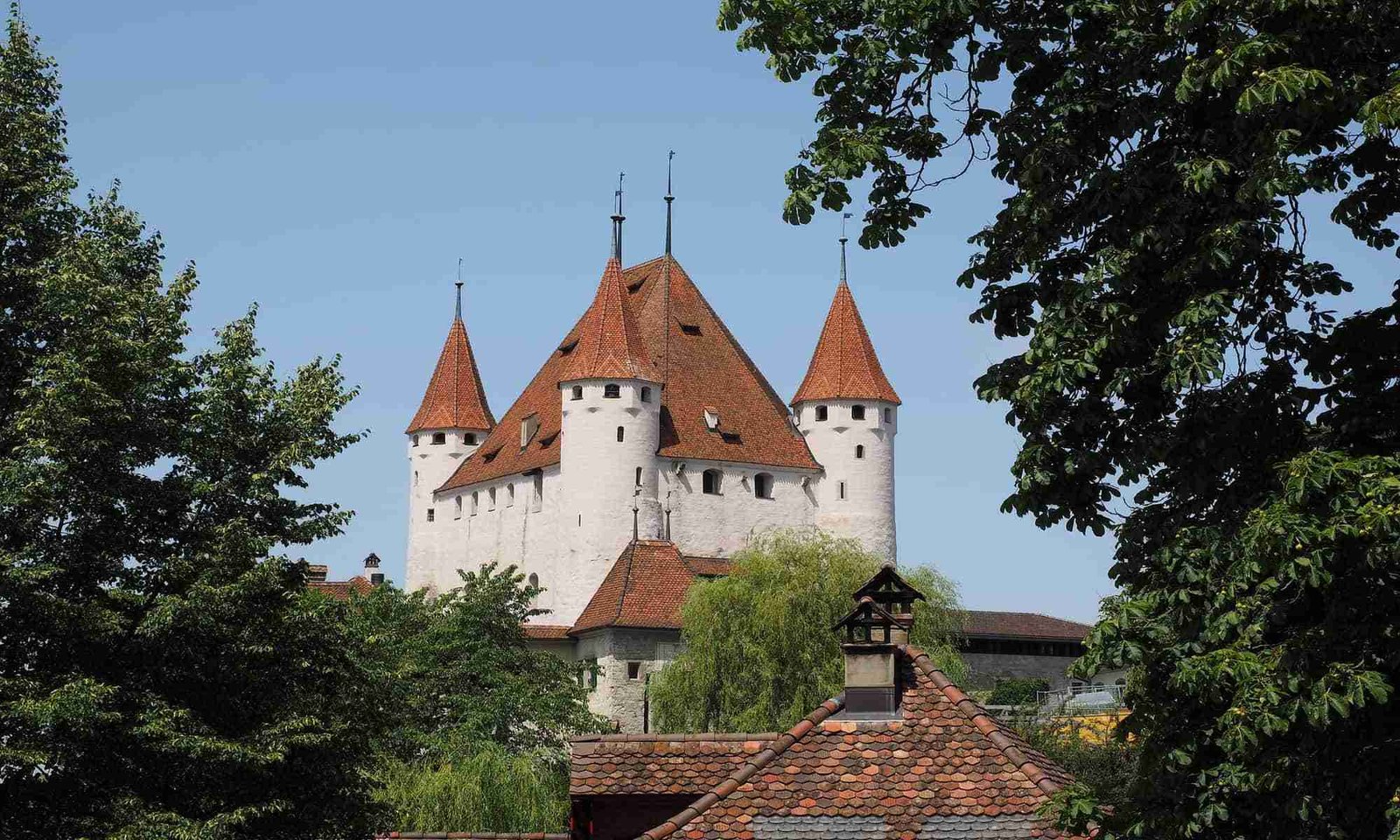
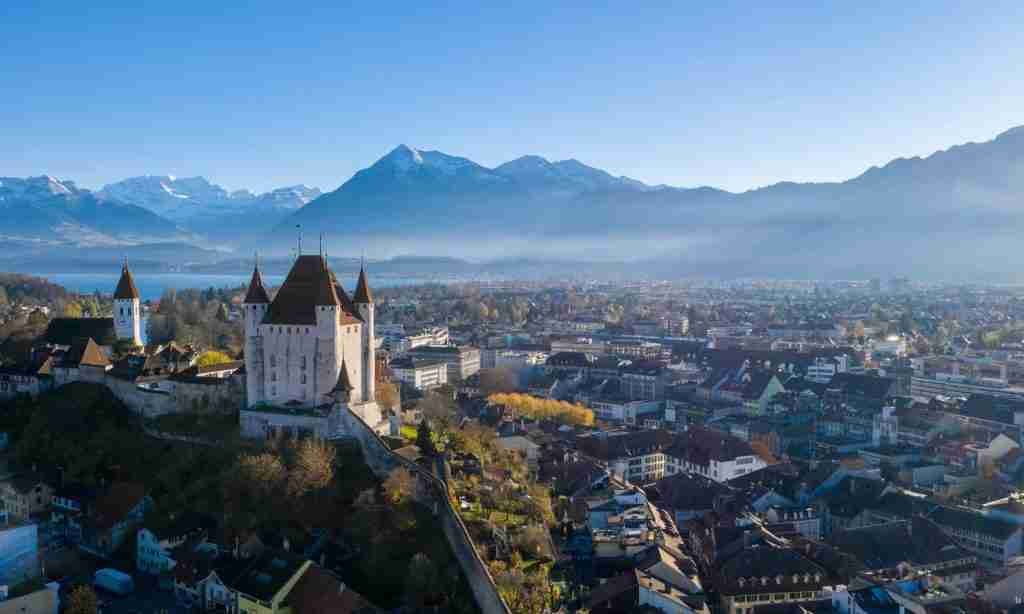
    In Switzerland, the city of Thun which is located at the lower end of the lake Thun is where I grew up and the gate to the Bernese Oberland. The historic Old Town is situated about one kilometer from the shore of the Lake Thun on the river Aare.

    Turreted Thun Castle, from the 1100s, stands on a hill above the old town. It has sweeping views of the Alps. The 14th-century City Church has an octagonal tower and a baroque hall. Thun Panorama, in lakeside Schadau Park, is a 19th-century, 360-degree painting of the town. Paddle steamers cruise Lake Thun to the resort town of Interlaken.

    With its historic buildings, towering raised promenades steeped in history, the white castle on the Schlossberg and the fantastic views over the lake set against the backdrop of the imposing Bernese Alps – Thun’s charm enchants locals and tourists alike.

    Thun lies at the north-western end of Lake Thun, and is the gateway to the Bernese Oberland. The River Aare, which flows from Lake Thun to Bern, shapes the cityscape of the eleventh-largest city in Switzerland with some 44,000 inhabitants.

    The city’s most famous landmark is the mighty Thun Castle, with its tower that was built between 1180 and 1190, which towers majestically over the Old Town. A historical museum is housed in the tower rooms, showcasing finds from the past 800 years relating to the region and its history, as well as a special exhibition which changes each year. Pride of place goes to the restored 12th-century knights’ hall, however. The view from the castle tower of the mountains and the lake is also unparalleled.

    The historical raised promenades in Thun’s old town are yet another highlight. But they are not the only reason to enjoy a stroll through the cobblestone streets. As well as traditional rows of houses, Thun is home to various small shops on different levels that invite visitors to browse and explore. Thanks to its enormous diversity, the city of Thun is worth a visit at any time of the year: While the charming old town and the delightful river and lakeside promenade are bursting with life in the spring, cultural open-air events such as the popular Lake Thun Festival get everyone in the mood for a summer of fun.

    Spring

    The warming spring sun melts the last of the mountain snow and bathes the meadows and alpine landscapes in radiant light. Spring brings forth new life and tempts you into the great outdoors. Discover spring in the mountains, on the lake or in mystical limestone caves. The deep-blue waters of Lake Thun, imposing mountain peaks, hiking trails set against a magnificent backdrop, picturesque mountain lakes and fascinating limestone caves – the Lake Thun region is blessed with a beautiful and multifaceted landscape. In April, the warming rays of the sun tempt you out into the great outdoors. Love topping up your energy levels surrounded by blossoming nature? Explore incredible hiking trails around the Niesen, Niederhorn and Stockhorn mountains or embark on a voyage of discovery to the impressive St. Beatus caves.

    Summer

    Thun is also known as the summer capital of Switzerland. With mountains, rivers and the magnificent lake on its doorstep, Thun is a paradise for sports enthusiasts, sun worshipers and keen swimmers. You can even go surfing right in the heart of the city. But the opportunity to enjoy a spot of indulgence is always just around the corner too. Whether that’s strolling through the old town, enjoying an aperitif on Mühleplatz or a delicious dinner on the banks of the Aare. Another particularly special way to enjoy a hot summer’s day is with a boat trip on Lake Thun or Lake Brienz. On Lake Thun, the “Blümlisalp” paddle steamer transports its passengers back in time to the days of the magnificent Belle Époque. But all 14 of the boats that operate on the two lakes offer breathtaking views of the three world-famous peaks, the Eiger, Mönch and Jungfrau.

    Fall

    Autumn, on the other hand, is the ideal season in which to get in touch with your artistic side, whether at the Thun Art Museum or the Thun Panorama in Schadau Park, an imposing panoramic painting of the city from 1814. And then again, walkers have always been particularly drawn to the coldest season too, with its wintry lakeside landscapes, and which offers the perfect opportunity for fine diners to enjoy the culinary delights on offer in the city’s many restaurants.

    Winter

    Christmas is the perfect time for a shopping trip through Thun’s festively dressed old town. And the Christmas market on Waisenhausplatz is a popular spot to meet for a chat over a mug of mulled wine. After an active winter’s day, the numerous restaurants, especially along the banks of the Aare, offer the perfect place in which to enjoy culinary delights and pleasant company. Even in the winter season, a boat sails on Lake Thun every day. So it is still possible to explore the city and region from the water at this time of year. Thanks to its outstanding transport links, Thun is also an ideal starting point for numerous winter activities throughout the entire Bernese Oberland holiday region.

    Thun, Switzerland – by The Traveler

    Stadt Der Falten

    THUN – Stadt der Alpen -> Stadt der Alten -> Stadt der Falten (Subs)

    On average, Thun has the oldest inhabitants in Switzerland. Remo Rickenbacher and David Oesch visited 40 Thun residents for their short film. The two young artists from Thun have a love-hate relationship with Thun. The city of Thun has the highest proportion of retirees in Switzerland.

    What does that mean? Does this characterize the city at the gateway to the Oberland? The town is sometimes called the town of the elderly (Stadt der Alten and therefore Stadt der Falten, i.e. wrinkled skin). An allusion to the tourist slogan: Thun – City of the Alps (Thun – Stadt der Alpen).

    The movie is biting. And yet affectionate. The critical text, which deals with the ageing population in Thun, describes the town as notoriously suffering from an inferiority complex.

    My Hometowns: >10 Years Each

    Let me introduce you to my hometowns -> Towns where I have lived for more than ten years each.

    Throughout my life, the diverse environments of Thun, Zurich and Bangkok have imparted invaluable lessons that have significantly shaped my identity. Each city possesses unique attributes that have influenced my growth and adaptability.

    Reflecting upon my journey through these distinct hometowns illuminates the essence of identity, revealing how our backgrounds can shape our narratives while inviting us to explore the world with open hearts and minds.

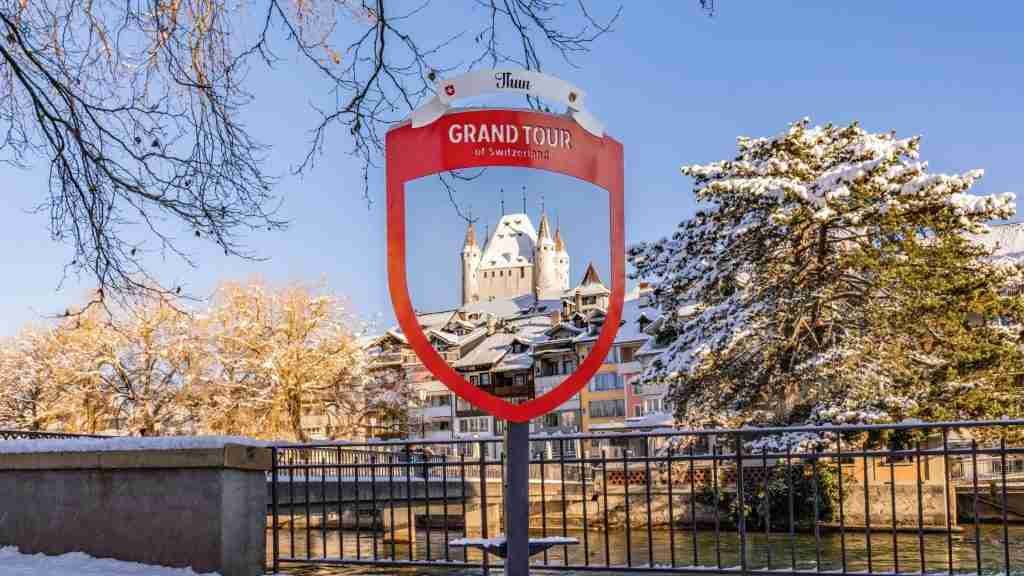
    Grand Tour Of Switzerland

    From palm-lined lakeshores to sparkling glaciers, from medieval villages to buzzing cities – the Grand Tour of Switzerland packs in an incredible number of sights. The concentration of attractions is unrivalled worldwide. What is the Grand Tour of Switzerland?

    • A 1,643km circuit of Switzerland that encompasses all of the country’s highlights
    • 650 road signs to point the way (or simply let your GPS guide you)
    • 46 top attractions, 22 lakes, 5 Alpine passes, 13 UNESCO World Heritage sites on 8 stages
    • Numerous photo spots that guarantee the best views
    • Charging made easy: the Grand Tour is also easy to complete using an electric vehicle

    What’s More

    The posts in My Blog feature reflective, story-driven pieces rooted in personal and societal insights.

    The topics in My Interests explore abstract, philosophical ideas and their cultural and societal impact.

  • (Re-)Action

    (Re-)Action

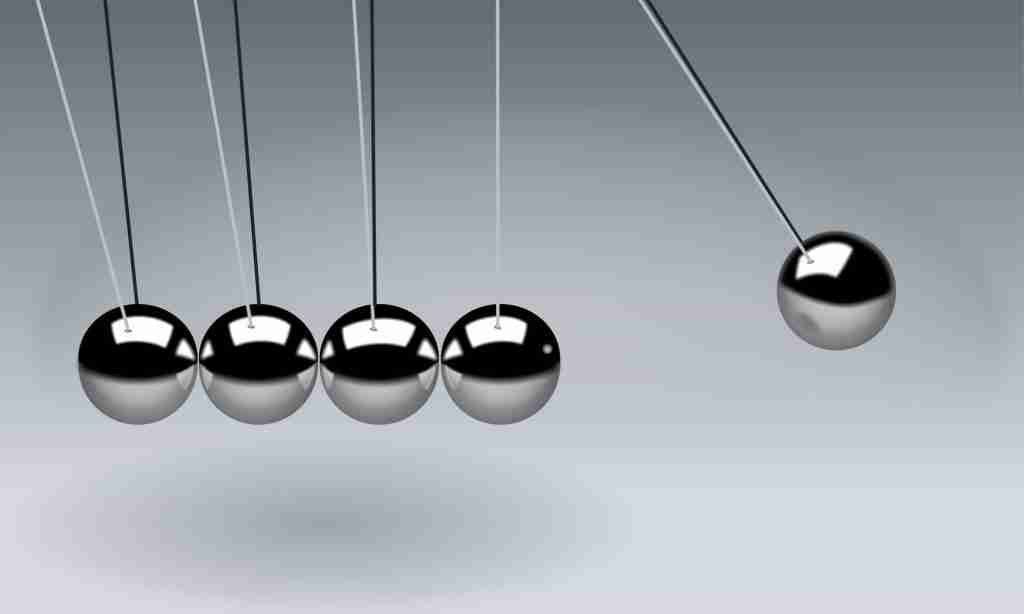
    The principle of action and reaction permeates various disciplines: In Physics, Newton’s Third Law tells us that every action produces an equal and opposite reaction, exemplifying fundamental forces. In Karma, actions and their moral weight are believed to shape future experiences. Metaphysics explores the nature of being and reality, pondering the consequences of existence and actions beyond the physical realm. Philosophy examines the nature of knowledge, reality, and ethical behavior, probing how actions shape our world. Lastly, in Chemistry, reactions involve the transformation of substances through the breaking and forming of bonds, releasing or absorbing energy in the process.

    Physics

    Exploring Newton’s Third Law: The Intricacies of Action and Reaction

    In physics, action and reaction are fundamental concepts forming the basis of Newton’s Third Law of Motion, which states that for every action, there is an equal and opposite reaction. This law governs the behavior of objects in everyday life and space.

    For example, when you sit in a chair, your body exerts a downward force due to gravity, and the chair exerts an equal and opposite upward force, preventing you from falling through. This interaction illustrates action and reaction at play.

    The implications of this law are profound. In space, where there is no air resistance, this principle enables the propulsion of rockets. As the rocket expels exhaust gases downward, an upward thrust is generated, propelling the rocket forward. This is the reaction to the action of the gases being forced out.

    On Earth, we see this law in sports, such as when a swimmer pushes against the water to propel forward. The swimmer’s hands and feet exert a force on the water (action), and the water pushes back with an equal force (reaction), moving the swimmer in the opposite direction.

    Read More

    Another interesting aspect of action and reaction is its role in understanding the forces within different systems. For instance, when analyzing the motion of a car, the engine generates a force that pushes the car forward. Simultaneously, the ground exerts an equal and opposite force on the tires, allowing the car to move. This interaction is crucial for the car’s acceleration and is a direct consequence of Newton’s Third Law.

    The law also has its nuances and common misconceptions. For example, the forces in action-reaction pairs act on different objects, which is why they don’t cancel each other out. This is a critical point of understanding, especially for students new to the concept of Newtonian mechanics.

    In conclusion, Newton’s Third Law of Motion – action and reaction – is a cornerstone of physics that explains the interaction of forces between objects. It’s a principle that not only helps us understand the physical world but also drives the technology that propels us into the future. Whether it’s the simple act of walking or the complex mechanics of a spacecraft, action and reaction are at the heart of motion and dynamics.

    Karma

    The Principle of Action and Reaction in Life: A Professional Insight

    Sir Isaac Newton’s third law states that for every action, there is an equal and opposite reaction. This principle, known as the action-reaction law, has implications beyond physics and can be applied metaphorically to our daily lives and interactions.

    The concept suggests that our actions, whether positive or negative, have consequences. Just as a swimmer pushes against the pool wall to move forward, or a rocket launches by expelling gases, our personal actions initiate a chain of reactions.

    In a professional context, this principle can be observed in leadership and teamwork. A leader’s approach to managing their team – be it through motivation, inspiration, or coercion – will elicit a corresponding reaction from team members. Similarly, the way colleagues interact with one another, the effort they put into their work, and the attitudes they bring to the workplace all generate reactions that can affect the entire organizational dynamic.

    Read More

    Moreover, the action-reaction principle is evident in the broader scope of societal interactions. The policies implemented by governments, the social programs initiated by communities, and even the content shared on social media – all these actions have the potential to incite significant reactions from the public, shaping societal norms and cultural trends.

    Understanding the implications of this principle can lead to a more mindful approach to our actions. It encourages individuals to consider the potential reactions their decisions may evoke and to act in a manner that fosters positive outcomes. For instance, in conflict resolution, being aware of the action-reaction dynamic can guide individuals to seek constructive solutions that benefit all parties involved.

    In conclusion, the action and reaction principle, while rooted in the physical sciences, offers a valuable lens through which to view our interactions and behaviors. By recognizing the power of our actions to influence and shape our environment, we can strive to create a positive impact in our personal and professional lives.

    Metaphysics

    Exploring the Dynamics of Action and Reaction in Metaphysics

    The concepts of action and reaction are pivotal in physics and hold significant philosophical weight in metaphysics. Metaphysical inquiry into action and reaction delves into causality and the interconnectedness of events and entities in the universe.

    In metaphysics, the law of cause and effect is a central theme, often discussed in the context of how events unfold and influence one another. This raises profound questions about the certainty of cause-effect relationships and the complexity of multiple causes and effects.

    These questions challenge our understanding of the linear progression of time and the nature of causality itself.

    Aristotle’s contributions to metaphysics provide a framework for understanding these concepts. He saw the world as an organic system where everything has a purpose or function, and his approach to metaphysics was grounded in the study of being qua being—the study of existence in its most fundamental form. For Aristotle, understanding the substance of things was key to comprehending their causes and effects.

    Read More

    The discussion of action and reaction in metaphysics also touches upon the notion of free will and determinism. Some philosophers argue that if every action has a reaction, then the concept of free will may be an illusion, as our choices could be seen as predetermined reactions to prior events.

    Moreover, the metaphysical perspective on action and reaction extends beyond the physical laws, suggesting that these principles may operate differently when applied to abstract entities or concepts. For instance, the idea of moral actions leading to corresponding reactions (karma) introduces a dimension where causality is not merely physical but also ethical.

    The debate on action and reaction in metaphysics is vast and complex, encompassing various philosophical traditions and viewpoints. It invites us to consider the deeper implications of our actions and their repercussions, both in the physical world and beyond. As we continue to explore these themes, we enrich our understanding of the universe and our place within it, prompting us to reflect on the ultimate nature of reality and our ability to influence it.

    Philosophy

    The Interplay of Action and Reaction in Philosophy

    Philosophy has long been fascinated with action and reaction, not just as physical phenomena, but as foundational elements of human behavior and ethics. The exploration of action delves into human intentionality and the consequences of our actions.

    At the heart of action theory is understanding what constitutes an action versus mere behavior. This distinction is crucial as it underpins our notions of agency, responsibility, and moral accountability.

    Philosophers like Aristotle have contributed significantly to this field, emphasizing the role of the agent’s intention in defining an action. According to Aristotle, a thorough explanation of an action must include both the efficient cause – the agent – and the final cause – the intention.

    Read More

    The modern discourse on action theory has been shaped by thinkers such as Donald Davidson, who posited that actions are bodily movements caused by intentions in the right way. This causal relationship between intention and action is central to understanding how we can be held accountable for our actions. Davidson’s theory suggests that without the proper causal link between intention and action, we cannot attribute moral significance to the behavior.

    Another aspect of action theory is the concept of reaction, which can be seen as the response to an action, whether it be another action, a change in belief, or an emotional response. The dynamics of action and reaction are not only relevant in interpersonal relationships but also in understanding societal and cultural shifts. Actions often provoke reactions that can lead to a chain of events, influencing the course of personal lives and even history.

    In the realm of ethics, the interplay between action and reaction is also significant. Ethical theories often evaluate the morality of an action based on its consequences or reactions. Utilitarianism, for example, assesses the moral worth of an action by the amount of happiness or utility it produces, essentially focusing on the reaction to the action.

    The philosophical inquiry into action and reaction also touches upon the debate surrounding free will and determinism. If every action has a reaction, and if these reactions can be predicted or determined by prior events, what does this say about human freedom? Philosophers have grappled with this question, trying to reconcile the apparent determinism of action-reaction chains with the experience of free will.

    In conclusion, the philosophical examination of action and reaction provides a rich and complex framework for understanding human behavior and morality. It challenges us to consider the implications of our actions, the nature of our intentions, and the reactions they elicit. As we navigate through the myriads of choices in life, the theories of action and reaction remind us of the weight our decisions carry and the ripple effects they create in the world around us.

    Chemistry

    What triggers a chemical reaction? – Kareem Jarrah (TED-Ed)

    The Intriguing Dance of Chemical Reactions: Action and Reaction

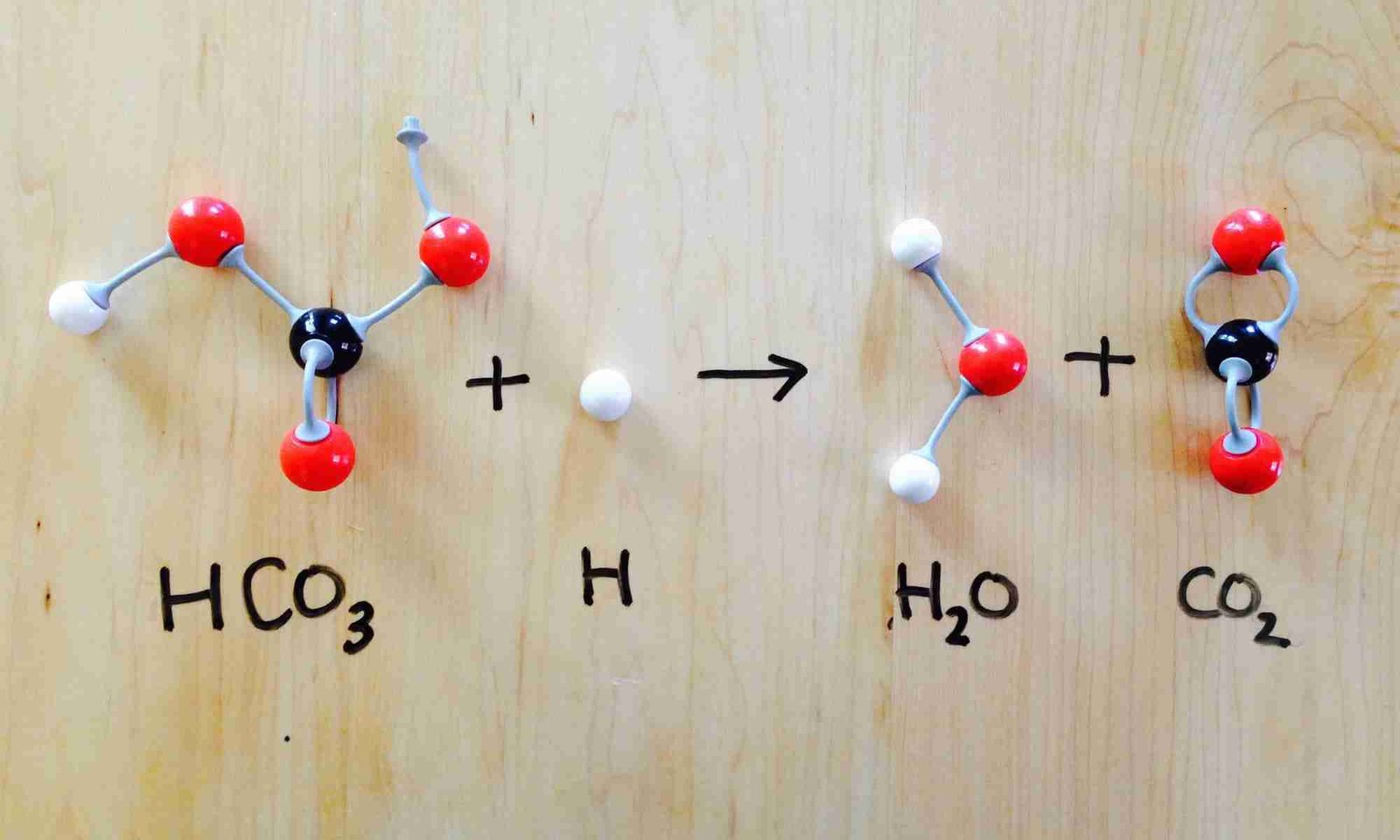
    In chemistry, action and reaction are embodied in the principle of cause and effect, where chemical reactions transform reactants into products through bond-breaking and bond-forming steps. Governed by thermodynamics and kinetics, these reactions follow the law of conservation of mass, stating that matter is neither created nor destroyed, so the total mass of reactants equals the total mass of products.

    Chemical reactions can be exothermic, releasing energy, or endothermic, absorbing energy, and this energy change is a key aspect of chemical reactions. The rate of a chemical reaction is influenced by various factors, including temperature, pressure, concentration of reactants, and the presence of catalysts. Catalysts are substances that increase the rate of a chemical reaction without being consumed in the process. They work by providing an alternative reaction pathway with a lower activation energy, which is the minimum energy required for a reaction to occur.

    Read More

    The nature of chemical reactions is also described by reaction mechanisms, which are step-by-step descriptions of the sequence of events that lead to the product formation. These mechanisms often involve intermediate species and transition states, which are high-energy configurations of atoms during the reaction process. Understanding these mechanisms is crucial for the synthesis of new compounds and the development of industrial processes.

    Moreover, chemical reactions are classified into different types, such as synthesis, decomposition, single replacement, and double replacement reactions. Synthesis reactions involve combining elements or simpler compounds to form more complex compounds. Decomposition reactions, on the other hand, involve breaking down complex compounds into simpler substances or elements. Single replacement reactions occur when an element replaces another element in a compound, while double replacement reactions involve the exchange of ions between two compounds to form two new compounds.

    In summary, action and reaction in chemistry refer to the dynamic processes that govern the transformation of substances. These processes are characterized by the interplay of energy changes, reaction rates, and the intricate dance of atoms and molecules as they break old bonds and form new ones, ultimately leading to the diverse array of chemical compounds that make up our world. Understanding these principles is essential for the advancement of chemical sciences and their applications in various fields, from medicine to environmental science.

    What’s More

    The posts in My Blog feature reflective, story-driven pieces rooted in personal and societal insights.

    The topics in My Interests explore abstract, philosophical ideas and their cultural and societal impact.

  • Climate Change

    Climate Change

    Climate change refers to significant, long-term changes in the average temperature, precipitation, and other atmospheric conditions on Earth. It is driven by both natural processes and human activities. Here’s an overview of the key aspects of climate change:

    Causes Of Climate Change

    1. Natural Causes
      • Volcanic Eruptions: Release large quantities of ash and gases, which can temporarily cool the Earth’s surface.
      • Solar Variability: Changes in the sun’s intensity can influence the Earth’s climate.
      • Ocean Currents: Shifts in ocean currents can lead to climate variations.
    2. Human Activities
      • Burning Fossil Fuels: Coal, oil, and natural gas combustion releases large amounts of carbon dioxide (CO2) and other greenhouse gases into the atmosphere.
      • Deforestation: Removing trees reduces the planet’s capacity to absorb CO2, increasing atmospheric CO2 levels.
      • Industrial Processes: Certain industrial activities release various greenhouse gases and pollutants.
      • Agriculture: Livestock farming produces methane, a potent greenhouse gas, and other agricultural practices can release nitrous oxide.

    There You Go

    The environment has limited capacity to provide space and energy, including food. Sustainability is about creating value, not just preserving it. Organizations that focus on long-term value are best positioned to benefit. There are many global imbalances, with population and climate being two major ones that impact each other.

    • World Population: The capacity of our environment to provide space and supply energy (incl. food) is limited.
    • Sustainability: It isn’t about value preservation – it’s about value creation. Organizations that effectively anchor their approach to long-term value are best positioned to benefit from the value they create.
    • (Im-)Blance: There are so many imbalances all over the world. I therefore chose to focus just on two main ones whereas the first certainly impacts the second in one way or another: Population and Climate.

    Effects Of Climate Change

    1. Temperature Increases
      • Global temperatures have risen significantly, with the last few decades being the warmest on record.
    2. Sea-Level Rise
      • Melting polar ice caps and glaciers, along with the thermal expansion of seawater, contribute to rising sea levels, which threaten coastal communities.
    3. Extreme Weather Events
      • Increased frequency and intensity of hurricanes, heatwaves, droughts, and heavy rainfall events.
    4. Ocean Acidification
      • The absorption of excess CO2 by oceans leads to acidification, affecting marine life, especially coral reefs and shellfish.
    5. Loss of Biodiversity
      • Many species face extinction due to changing habitats and disrupted ecosystems.
    6. Impact on Human Health
      • Increased heat-related illnesses, the spread of vector-borne diseases, and food and water security issues.
    Causes and Effects of Climate Change | National Geographic

    Mitigation And Adaptation

    1. Mitigation
      • Reducing Emissions: Transitioning to renewable energy sources, improving energy efficiency, and adopting cleaner technologies.
      • Carbon Sequestration: Enhancing natural carbon sinks through reforestation and sustainable land management practices.
      • Policy Measures: Implementing policies and regulations to limit greenhouse gas emissions, such as carbon pricing and emissions trading schemes.
    2. Adaptation
      • Infrastructure Resilience: Building infrastructure that can withstand extreme weather events and rising sea levels.
      • Agricultural Practices: Developing crops that are more resilient to changing climate conditions and improving water management.
      • Community Preparedness: Educating and preparing communities to respond to climate-related disasters.

    International Efforts

    International Efforts to Combat Climate Change -> Climate change caused by greenhouse gas emissions is, by its very nature, a global issue. A common strategy and binding targets must therefore be defined on a planetary scale to effectively combat global warming. This has been the aim of many international climate change initiatives, from the Earth Summit in Rio in 1992 to the universal Paris Agreement adopted in December 2015 and the annual COPs.

    • United Nations
      • The United Nations Framework Convention on Climate Change (UNFCCC), agreed in 1992, is the main international treaty on fighting climate change. Its objective is to prevent dangerous man-made interference with the global climate system.

    Emissions trading is the trading of certificates that entitle the holder to emit a certain amount of CO₂. These certificates are allocated and can be traded, giving emissions a price. The CO₂ price is thus a market-based instrument of environmental policy for reducing CO₂ emissions.

    So, the idea is to specifically promote the retail trade (B2C): The (digital) retail of emissions is the trading of certificates that compensate for the emission of a certain amount of CO₂ without the need to purchase a product or other service (e.g. goods of any kind or a trip by plane -> Transfer of CO₂ price from G2B / B2B to B2C).

    Should you be interested in pursuing this idea further, you are cordially invited to submit your best consideration of investment for the project CO₂ Compensation

    Addressing climate change requires a concerted global effort, combining scientific research, technological innovation, and coordinated policy actions to mitigate its impacts and adapt to its inevitable changes.

    “Climate change is real. It is happening right now, it is the most urgent threat facing our entire species and we need to work collectively together and stop procrastinating.”

    – Leonardo Di Caprio

    What’s More

    The posts in My Blog feature reflective, story-driven pieces rooted in personal and societal insights.

    The topics in My Interests explore abstract, philosophical ideas and their cultural and societal impact.